Most corrosion failures in process plants do not happen because engineers ignored material selection. They happen because the selected material was suitable for one part of the environment but not the complete combination of temperature, chemistry, chloride level, crevice conditions and operating cycles.
Carbon steel with coating handles many general applications. 316 stainless covers mild chloride service. Duplex 2205 and super duplex 2507 extend the range for seawater and offshore environments. But some applications remain outside those materials' practical limits: hot hydrochloric acid, wet flue gas containing chlorides and sulfur compounds, reducing sulfuric acid, chemical reactors with mixed acids, and gasketed joints where stagnant chloride-rich liquid concentrates.
That is where Hastelloy C276 (UNS N10276, Werkstoff 2.4819) fasteners are specified.
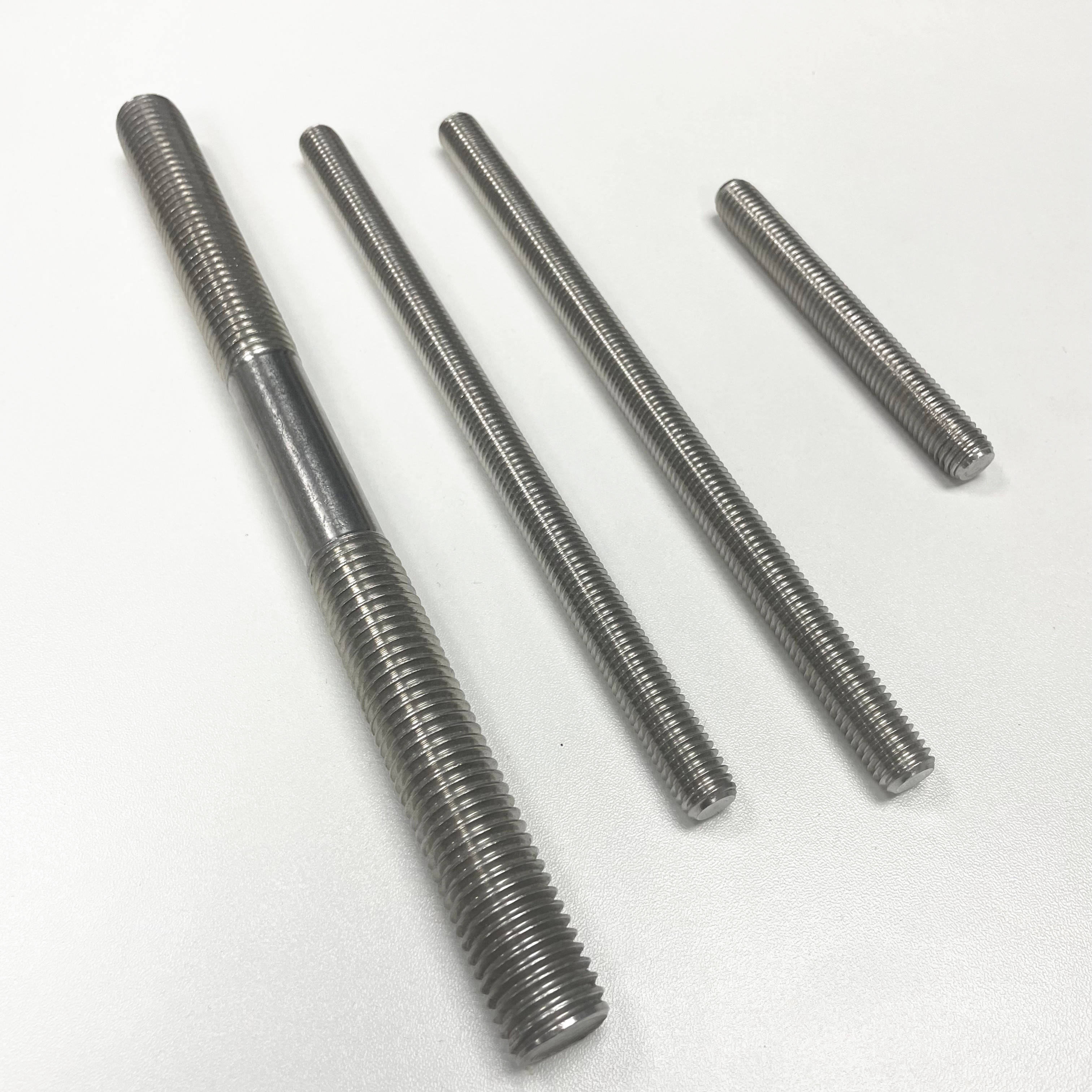
As a custom fastener manufacturer and supplier, Yuanpai produces C276 studs, bolts, hex nuts and washers for chemical processing, pollution-control equipment, petrochemical plants, marine systems and OEM equipment manufacturers. This guide explains what makes C276 different, where it should be selected instead of Inconel 625 or super duplex 2507, how C276 fasteners are manufactured, and what documentation procurement teams should request before approval.
We manufacture according to customer drawings and applicable ISO, EN, DIN and ASTM material references, with UNS N10276 as the primary alloy identification.
For a broader view of corrosion-resistant bolting materials, see our nickel alloy fasteners guide.
What Is Hastelloy C276?
Hastelloy C276 is a nickel-chromium-molybdenum-tungsten alloy designed for severe corrosion environments where conventional stainless steels and lower-alloy nickel materials cannot maintain service life.
Its designation:
- UNS: N10276
- Werkstoff: 2.4819
- Material family: Nickel-based corrosion-resistant alloy (CRA)
- Strength mechanism: Solid-solution strengthening
- Typical supply condition: Solution annealed
Unlike precipitation-hardened nickel alloys such as Inconel 718, C276 does not obtain strength through aging treatment. Its value comes from corrosion resistance created by the combination of nickel, molybdenum, chromium and tungsten.
For fastener selection, four characteristics matter most:
1. Excellent resistance to reducing acids
The high molybdenum content is the main reason C276 performs well in reducing environments.
Typical examples:
- Hydrochloric acid
- Sulfuric acid at moderate concentrations
- Phosphoric acid
- Organic acids containing chlorides
Many stainless steels lose passive protection in these environments. C276 maintains a stable nickel-based structure.
2. Strong resistance to localized corrosion
C276 is designed to resist:
- Pitting corrosion
- Crevice corrosion
- Chloride stress corrosion cracking (SCC)
- Corrosion under deposits and gaskets
This makes it suitable for bolted flange connections where corrosion concentrates around threads, washers and gasket contact areas.
3. Low carbon and silicon chemistry
C276 contains deliberately controlled low levels of carbon and silicon:
- Carbon: typically ≤0.01%
- Silicon: typically ≤0.08%
This reduces carbide precipitation and helps maintain corrosion resistance in welded components and heat-affected areas.
4. Work-hardening behavior
C276 is not manufactured like ordinary carbon steel fasteners.
The alloy rapidly work-hardens during machining and forming. Incorrect processing can create:
- Tool wear
- Surface hardening
- Dimensional instability
- Thread quality problems
For this reason, C276 bolts and studs are normally produced from solution-annealed bar using controlled machining processes rather than standard cold heading.
Chemical Composition of Hastelloy C276
C276 chemistry is controlled according to nickel alloy material standards such as ASTM B574/B575 and equivalent international specifications.
| Element | Typical range (wt%) | Purpose |
|---|---|---|
| Nickel (Ni) | Balance, 57 min | Corrosion-resistant matrix |
| Molybdenum (Mo) | 15.0–17.0 | Reducing acid resistance, crevice corrosion resistance |
| Chromium (Cr) | 14.5–16.5 | Oxidizing resistance and passivation |
| Tungsten (W) | 3.0–4.5 | Additional localized corrosion resistance |
| Iron (Fe) | 4.0–7.0 | Controlled alloy addition |
| Cobalt (Co) | ≤2.5 | Residual control |
| Carbon (C) | ≤0.01 | Prevents carbide precipitation |
| Silicon (Si) | ≤0.08 | Improves weld corrosion resistance |
| Manganese | Low limit | Process control |
| Sulfur / Phosphorus | Controlled low levels | Cleanliness |
The high molybdenum and tungsten content is the main difference between C276 and many other nickel alloys.
A commonly referenced corrosion indicator is PREN (Pitting Resistance Equivalent Number):
PREN ≈ Cr + 3.3 × Mo + 16 × N
C276 does not contain meaningful nitrogen additions, but its molybdenum and tungsten additions provide very high localized corrosion resistance.
Approximate comparison:
| Material | Approximate PREN range | Material family |
|---|---|---|
| 316 stainless steel | ~24 | Austenitic stainless |
| Duplex 2205 | ~34 | Duplex stainless |
| Super duplex 2507 | ~42–45 | Duplex stainless |
| Inconel 625 | ~42–47 | Nickel alloy |
| Hastelloy C276 | ~65+ equivalent resistance range | Nickel alloy |
PREN is only a screening value. Actual performance depends on temperature, chemistry, concentration, velocity and mechanical condition.
Corrosion Resistance: Where C276 Provides the Difference
The reason C276 appears in chemical plants is not simply because it has a high nickel content. It is because the alloy was developed for environments where corrosion mechanisms overlap.
Reducing Acid Service
C276 is particularly strong in reducing acid environments.
Examples:
- Hydrochloric acid systems
- Sulfuric acid process equipment
- Acid recovery units
- Chemical reactors
The molybdenum content provides resistance where chromium-based passive films become unstable.
This is one area where C276 generally exceeds many stainless steels and has advantages over alloys with higher chromium but lower molybdenum.
Wet Flue Gas Desulfurization (FGD)
FGD systems create one of the most demanding corrosion environments:
- Wet sulfur dioxide
- Chlorides from fuel sources
- Condensation cycles
- Acidic deposits
- Elevated temperatures
Typical C276 fastener applications include:
- Absorber towers
- Spray headers
- Duct flange connections
- Reheater equipment
- Stack gas systems
In these applications, the fastener often sees more severe local conditions than the main equipment body because threads and gasket areas trap contaminants.
Chloride-Rich Marine Environments
C276 is also used in marine applications where crevice conditions are severe:
- Seawater pumps
- Marine heat exchangers
- Splash-zone equipment
- Coastal chemical plants
For normal seawater service, duplex and super duplex may provide a more economical solution. C276 is generally selected when additional chemical resistance or temperature capability is required.
Mixed Chemical Streams
Real industrial systems rarely contain a single pure chemical.
Actual process conditions may include:
- Acid mixtures
- Chlorides
- Oxidizing contaminants
- Temperature fluctuations
- Cleaning chemicals
C276 was designed for these mixed environments where material selection based on one parameter alone can fail.
Hastelloy C276 vs Inconel 625
C276 and Inconel 625 are often compared because both are nickel-based corrosion-resistant alloys.
They are not direct replacements.
| Property | Hastelloy C276 (UNS N10276) | Inconel 625 (UNS N06625) |
|---|---|---|
| Alloy system | Ni-Cr-Mo-W | Ni-Cr-Mo-Nb |
| Main strength element | Solid solution Mo/W | Solid solution Mo/Nb |
| Chromium | 14.5–16.5% | 20–23% |
| Molybdenum | 15–17% | 8–10% |
| Tungsten | 3–4.5% | None |
| Carbon control | ≤0.01% | ≤0.10% |
| Reducing acids | Excellent | Good |
| Oxidizing environments | Good | Very good |
| Seawater | Excellent in severe crevice conditions | Excellent |
| Sour oil & gas standardization | Less common | More widely specified |
| Typical use | Chemical processing | Oil & gas, seawater, aerospace |
A practical selection rule:
Choose C276 when the controlling problem is reducing chemistry:
- Hydrochloric acid
- Sulfuric acid
- Mixed acidic chloride environments
- FGD scrubber service
Choose Inconel 625 when the main requirement is:
- Seawater resistance
- Sour-service bolting
- Higher mechanical strength
- More common oil and gas specifications
The final choice should always follow the project material compatibility study.
Hastelloy C276 vs Super Duplex 2507
Super duplex 2507 is one of the most common alternatives considered before moving to a nickel alloy.
| Factor | Super Duplex 2507 | Hastelloy C276 |
|---|---|---|
| Cost | Lower | Higher |
| Tensile strength | Higher | Lower |
| Yield strength | Higher | Lower |
| Chloride resistance | Very good | Excellent |
| Reducing acids | Limited | Excellent |
| Temperature capability | More limited | Higher capability |
| Sour service use | Common within limits | Application-specific |
2507 remains an excellent engineering choice for:
- Seawater piping
- Offshore utilities
- Chloride service
- General marine applications
C276 is selected when:
- Acid chemistry dominates
- Temperature exceeds duplex limits
- Chloride SCC risk is severe
- Previous stainless or duplex materials have failed
The correct question is not "which alloy is stronger?" but "which corrosion mechanism controls the joint?"
Typical Applications of C276 Fasteners
C276 bolts, studs and nuts are commonly found in:
Chemical Processing Plants
Applications include:
- Reactor flange connections
- Heat exchangers
- Acid circulation systems
- Distillation equipment
- Specialty chemical production lines
Flue Gas Desulfurization Equipment
FGD remains one of the most recognized C276 applications:
- Absorber towers
- Scrubber internals
- Duct connections
- Chimney gas systems
Pollution Control Equipment
Including:
- Waste incineration systems
- Exhaust treatment equipment
- Wet scrubbers
- Chemical neutralization units
Pulp and Paper Industry
Used in:
- Bleaching systems
- Digester equipment
- Chloride-containing process areas
Marine and Coastal Equipment
Used where:
- Crevice corrosion risk is high
- Maintenance access is limited
- Downtime costs exceed material premium
Manufacturing Capabilities: Why C276 Requires Controlled Machining
Hastelloy C276 fasteners are not produced like ordinary carbon steel or stainless-steel bolts.
Standard fasteners are commonly manufactured through cold heading:
- Wire cutting
- Multi-stage forming
- Heading
- Thread rolling
- Heat treatment
C276 is different because the alloy work-hardens rapidly. Excessive cold deformation can create surface hardening, tool damage and inconsistent thread conditions.
For this reason, C276 fasteners are normally manufactured from solution-annealed bar stock through controlled machining processes.
CNC Machining From Certified Bar
The typical production route:
- Receive certified C276 raw bar with heat traceability.
- Verify chemistry through PMI.
- Machine studs, bolts, nuts or special components using CNC equipment.
- Produce threads using controlled cutting or rolling processes.
- Inspect dimensions and surface condition.
- Complete final documentation package.
This method provides:
- Accurate dimensions
- Controlled thread geometry
- Lower risk of work-hardened defects
- Full material traceability
Typical products include:
- Double-end studs
- Fully threaded rods
- Hex bolts
- Heavy hex nuts
- Washers
- Custom flange fasteners
- OEM-designed special bolts
Thread Manufacturing
Thread production requires particular attention because C276 can harden quickly during machining.
Common approaches:
Cut Threads
Used frequently for:
- Short production runs
- Large diameters
- Custom drawings
Advantages:
- Flexible
- No dedicated tooling required
- Suitable for special dimensions
Rolled Threads
Used where fatigue performance is important.
Requirements:
- Controlled rolling force
- Correct heat-treatment condition
- Avoidance of excessive cold work
For critical applications, the manufacturing method should be confirmed before order placement.
Machining Considerations
C276 requires:
- Sharp cutting tools
- Stable machining parameters
- Controlled cutting speeds
- Proper coolant selection
Poor machining practice can create a hardened surface layer that affects:
- Thread quality
- Dimensional accuracy
- Corrosion performance
Galling Control
Like many nickel alloys, C276 has a tendency to gall during assembly.
Typical controls include:
- Compatible anti-seize compound
- Controlled thread surface finish
- Defined friction coefficient
- Assembly torque calculation based on actual lubrication condition
C276-to-C276 threaded connections should not be assembled dry.
For flange applications, the lubrication specification should be included in the installation procedure, not left to site personnel.
Design and Ordering Notes for C276 Fasteners
Correct material selection is only the first step. The fastener specification should remove ambiguity before production begins.
Specify the Full Material Condition
A suitable RFQ description should include:
- Hastelloy C276
- UNS N10276
- Solution annealed condition
- Applicable ASTM/EN material standard
- EN 10204 3.1 documentation
Simply writing "C276 bolt" is insufficient because it does not define:
- Material verification requirements
- Heat-treatment condition
- Documentation level
Match Bolt, Nut and Washer Materials
In severe corrosion service, mixed-material assemblies can create weak points.
Recommended practice:
- C276 stud with C276 nut
- Compatible washer material
- Same alloy family wherever practical
Using a lower-grade nut may create:
- Thread corrosion
- Crevice attack
- Reduced assembly life
The nut is often the first component exposed to trapped process contamination.
Consider Flange Design
C276 fasteners are commonly used with:
- Alloy-lined equipment
- Nickel alloy piping
- Chemical process vessels
- Heat exchangers
The bolt material should match the corrosion design intent of the joint.
A corrosion-resistant flange with lower-grade bolting can become the limiting component.
Define Thread Standard
Typical options:
- Metric ISO threads
- UNC / UNF threads
- BSW threads
- Special OEM thread forms
The drawing should define:
- Thread class
- Length
- Engagement
- Partial or full thread
- Surface condition
Avoid Unnecessary Coatings
C276 normally does not require metallic coatings.
Common supply condition:
- Pickled
- Clean surface
- Plain finish
Plating is generally avoided because:
- It may introduce contamination
- It can affect thread fit
- It provides little benefit compared with the alloy's inherent corrosion resistance
Quality Control and Documentation
For high-cost nickel alloy fasteners, documentation is part of the product.
A C276 package should provide complete traceability from raw material to finished component.
EN 10204 3.1 Material Certificates
Standard documentation includes:
- Chemical composition
- Mechanical properties
- Heat number
- Material designation
- Manufacturing batch traceability
Each finished lot should link back to the original C276 raw material heat.
Positive Material Identification (PMI)
PMI is strongly recommended for C276 applications.
Typical verification methods:
- X-ray fluorescence (XRF)
- Optical emission spectroscopy (OES) sampling
PMI confirms that the delivered alloy is actually:
- UNS N10276
- Correct nickel alloy chemistry
- Not a lower-cost substitute
Mechanical Testing
Depending on project requirements:
- Tensile testing
- Yield testing
- Elongation testing
- Hardness testing
are performed according to the applicable specification.
Because C276 is normally supplied solution annealed, hardness verification helps confirm the correct condition.
Dimensional Inspection
Inspection records may include:
- Thread gauge results
- Length measurement
- Diameter inspection
- Head dimensions
- Drawing compliance
For OEM equipment, dimensional reports are often required before final approval.
Third-Party Inspection
For chemical plants and regulated projects, third-party inspection may be requested from:
- SGS
- Bureau Veritas
- TÜV
- Other approved inspection agencies
Typical activities:
- Raw material review
- PMI witness
- Final inspection
- Certificate review
Quick-Reference Specification Table
| Item | Hastelloy C276 Fastener Specification |
|---|---|
| Material | Hastelloy C276, UNS N10276, Werkstoff 2.4819 |
| Alloy type | Nickel-chromium-molybdenum-tungsten alloy |
| Condition | Solution annealed |
| Main alloy elements | Mo 15–17%, Cr 14.5–16.5%, W 3–4.5% |
| Carbon level | ≤0.01% |
| Typical strength | Tensile approximately 690–760 MPa in annealed condition |
| Corrosion focus | Reducing acids, chloride crevice corrosion, FGD environments |
| Manufacturing | CNC machining from certified bar |
| Thread options | Metric ISO, UNC/UNF, custom threads |
| Finish | Pickled/plain finish; anti-seize recommended |
| Coating | Normally supplied without metallic coating |
| Products | Studs, bolts, nuts, washers, custom parts |
| US material references | ASTM B574/B575 bar/flake; ASTM F468 bolts / F467 nuts as customer-specified equivalents |
| Sour-service note | NACE MR0175 / ISO 15156 applies only where H₂S service is specified |
| Documentation | EN 10204 3.1, PMI, hardness, dimensional reports |
| Inspection | Third-party inspection available |
Related Guides
Continue exploring corrosion-resistant fastener materials:
- Custom fastener manufacturer and supplier — Yuanpai center
- Inconel alloy fasteners — 625, 718 and Monel families
- Duplex and super duplex fasteners
- Hex nuts, lock nuts and flange nuts manufacturer
FAQ
What is Hastelloy C276 used for?
Hastelloy C276 is used for fasteners in aggressive chemical environments where stainless steel and duplex alloys may not provide sufficient corrosion resistance. Typical applications include chemical reactors, FGD scrubbers, acid processing equipment, pollution-control systems and severe chloride service.
How is Hastelloy C276 different from Inconel 625?
C276 contains higher molybdenum and tungsten, giving it stronger resistance in reducing acids such as hydrochloric and sulfuric acid environments.
Inconel 625 contains more chromium and has higher typical mechanical strength, making it widely used for seawater and sour-service oil and gas applications.
The correct choice depends on the controlling corrosion mechanism.
Is Hastelloy C276 stronger than super duplex 2507?
No. Super duplex 2507 generally provides higher mechanical strength and lower material cost.
C276 is selected when corrosion resistance is the limiting factor, especially in reducing acids, mixed chemical streams and severe chloride environments.
Can Hastelloy C276 bolts be cold headed?
Generally, no.
C276 work-hardens rapidly, making conventional cold heading unsuitable for most fastener production.
Most C276 bolts and studs are manufactured by CNC machining from solution-annealed bar stock.
What does PREN mean for C276?
PREN is a calculation used to compare resistance to localized pitting corrosion.
C276 has very high localized corrosion resistance because of its high molybdenum and tungsten content.
However, actual corrosion performance depends on the complete operating environment, not PREN alone.
Do C276 fasteners need anti-seize?
Yes.
Nickel alloys can gall during assembly.
A suitable anti-seize compound and controlled assembly procedure should be specified, especially for C276-to-C276 threaded connections.
What certificates are supplied with C276 fasteners?
Typical documentation includes:
- EN 10204 3.1 certificate
- Chemical analysis
- Mechanical test results
- PMI verification
- Hardness reports
- Dimensional inspection records
Third-party inspection can be arranged for regulated projects.
Can Yuanpai manufacture custom C276 bolts and studs?
Yes.
We manufacture C276:
- Stud bolts
- Threaded rods
- Hex bolts
- Nuts
- Washers
- Special OEM components
according to customer drawings and project documentation requirements.
Talk to Our Engineering Team
If your equipment handles hydrochloric acid, sulfuric acid, FGD gases, chloride-rich chemicals or another aggressive process environment, send us the application details before selecting the fastener grade.
Our engineering team can review:
- Process chemistry
- Temperature conditions
- Chloride exposure
- Required alloy grade
- Thread specification
- Documentation requirements
We will confirm whether C276 is suitable, or whether Inconel 625, super duplex or another material provides a better technical solution.
For custom drawings, we review material compatibility, manufacturing method and inspection requirements before quotation.
- Email our engineering team: [email protected]
- WhatsApp: +86 1853 100 9807 — send your C276 bolt, stud or nut drawing, quantity and destination. We will provide material confirmation, production schedule and documentation details.