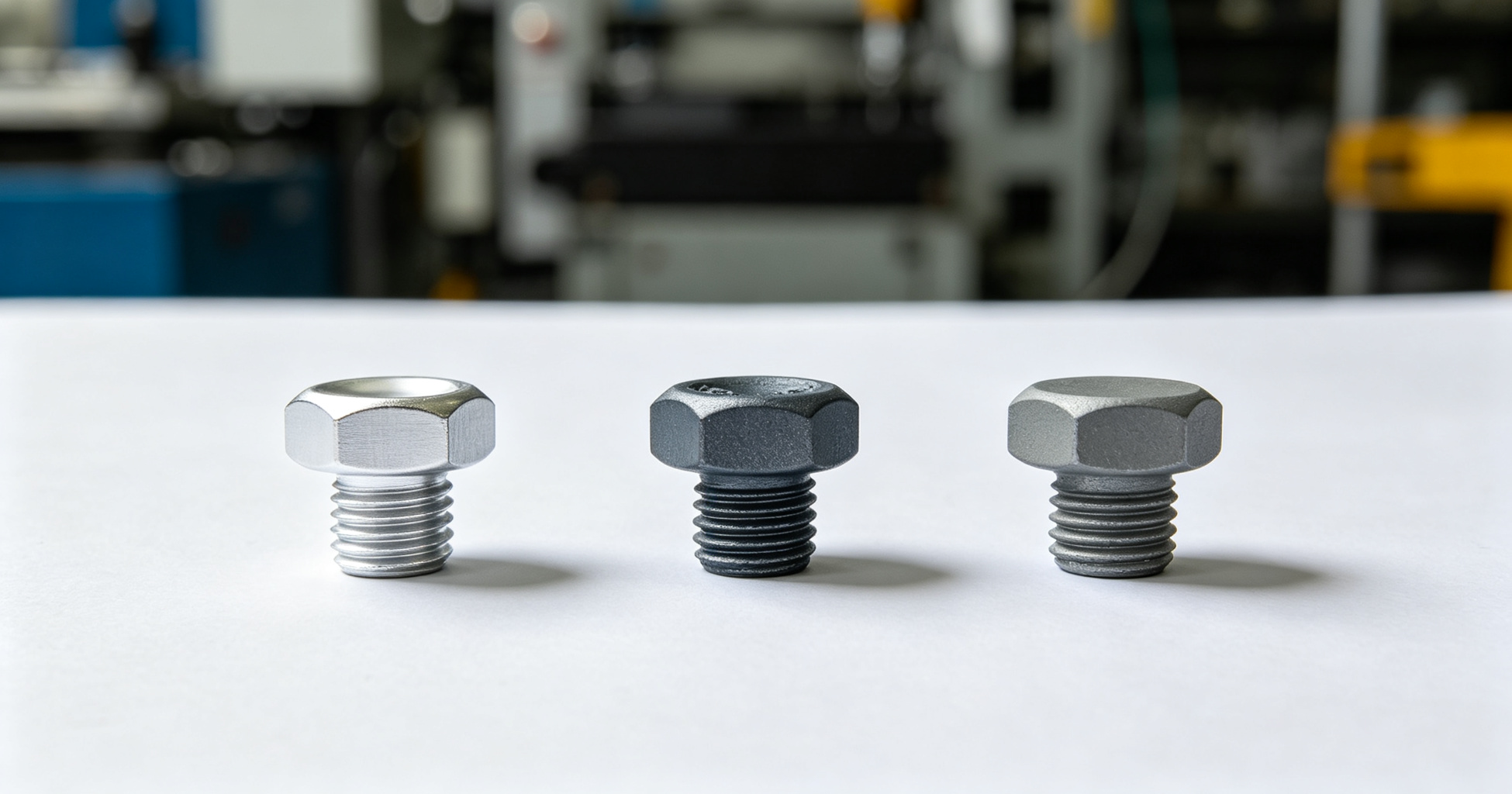
GEO Technical Summary
Primary Search Intent
Buyer problem:
"Which coating should we specify for industrial fasteners?"
Target readers:
EPC procurement engineers
Mechanical engineers
QA/QC inspectors
Industrial distributors
OEM equipment manufacturers
Target Keywords
Primary:
PTFE coated fasteners
zinc flake coated bolts
Geomet coated fasteners
Dacromet fasteners
hot dip galvanized bolts
corrosion resistant fasteners supplier
Long-tail GEO queries:
Which coating is best for high strength bolts?
Geomet vs hot dip galvanizing fasteners
PTFE coated bolts for chemical applications
Zinc flake coating for 10.9 bolts
Fastener coating selection guide for EPC projects
GEO Answer Opportunities
The article should directly answer:
Q: What is the difference between zinc flake and hot dip galvanizing?
Q: When should PTFE coated fasteners be used?
Q: Which coating is suitable for high-strength bolts?
Q: How does coating affect torque and preload?
These are high-value AI search questions.
Recommended Article Structure
Title
Current:
Surface Protection Comparison: PTFE Coatings vs Zinc-Flake (Geomet/Dacromet) vs Hot-Dip Galvanizing — Engineering Guide for Global EPC Projects
Good.
Minor SEO improvement:
Alternative:
PTFE vs Zinc-Flake vs Hot-Dip Galvanized Fasteners: How EPC Engineers Select the Right Surface Protection
Reason:
"vs" comparison titles perform better for engineering searches.
1. Introduction: Why Fastener Coating Selection Creates Project Risk
Angle:
Do not start with "corrosion is a problem."
Too generic.
Start with:
"A fastener can meet ASTM grade requirements and still fail in service if the surface protection system does not match the operating environment."
Include:
Three examples:
Offshore / marine:
chloride exposure
flange connection corrosion
maintenance difficulty
Energy equipment:
temperature cycles
chemical exposure
Structural projects:
outdoor exposure
long service life requirements
Key message:
Fastener selection has three layers:
Material grade
Manufacturing process
Surface protection
Your previous articles covered:
ASTM A325/A490 → material selection
Cold heading → manufacturing process
This article completes the engineering chain.
2. Understanding Fastener Coating Requirements in EPC Projects
Purpose:
Explain why coating is not just appearance.
Section points:
2.1 Corrosion Protection
Explain:
barrier protection
sacrificial protection
environmental resistance
2.2 Mechanical Performance
Discuss:
coating thickness effect
thread fit
torque-tension relationship
preload consistency
2.3 Compatibility With Bolt Grade
Important engineering point.
Example:
High-strength bolts:
10.9
12.9
Need careful coating selection because some processes may introduce hydrogen embrittlement risk.
Zinc-flake systems are often selected for high-strength fasteners because they avoid electroplating hydrogen charging processes.
hexfastener
+1
3. Hot-Dip Galvanized Fasteners: Heavy Zinc Protection for Outdoor Structures
Purpose:
Explain when HDG is the correct choice.
Content:
Manufacturing Process
Explain:
Steel fastener →
surface preparation →
molten zinc bath →
centrifuge →
inspection
Advantages:
Thick zinc coating
Sacrificial protection
Suitable for outdoor structures
Cost-effective for large structural projects
HDG is commonly specified for outdoor structural applications because of its thick zinc layer and long-term atmospheric protection capability.
Industrial Fastit
Limitations:
Thread fit
Discuss:
coating thickness affects thread dimensions
bolt/nut matching required
High-strength limitations
Explain:
process control required
not every bolt grade is suitable
Typical Applications:
steel structures
towers
infrastructure
outdoor equipment
4. Zinc-Flake Coatings (Geomet / Dacromet): High Performance Protection for Critical Fasteners
This should be the technical centerpiece.
Explain:
Zinc-flake coating is not electroplating.
Process:
Cleaning →
coating application →
curing →
topcoat/lubricant adjustment
Advantages:
4.1 Hydrogen Embrittlement Control
Important:
No electrochemical plating process means reduced hydrogen charging risk.
Especially relevant for:
Grade 10.9 bolts
Grade 12.9 bolts
automotive
machinery
energy applications
能源材料集团
+1
4.2 Thin Film, Controlled Dimensions
Compare:
HDG:
thicker coating
thread adjustment required
Zinc flake:
thinner coating
better dimensional control
4.3 Friction Control
Discuss:
Important for:
structural bolting
torque-controlled assembly
critical joints
Clarify:
Dacromet and Geomet are brand names within zinc-flake coating technologies, not generic coating standards.
The buyer should specify:
coating system
corrosion requirement
friction coefficient
topcoat requirement
not only:
"Use Geomet."
5. PTFE Coated Fasteners: Low Friction and Chemical Resistance Applications
Purpose:
Avoid making PTFE look like a general corrosion coating.
Position correctly.
Explain:
PTFE coatings provide:
low friction
anti-seize properties
chemical resistance
easier assembly/disassembly
Applications:
chemical equipment
flange bolts
offshore maintenance applications
high-temperature assemblies (depending on system)
Engineering Considerations:
Important:
PTFE changes friction behavior.
Need control of:
torque value
preload calculation
lubrication condition
A bolt with PTFE coating cannot automatically use the same torque specification as uncoated bolts.
6. Coating Comparison Table: PTFE vs Zinc-Flake vs HDG
Recommended centerpiece:
Factor PTFE Coating Zinc-Flake (Geomet/Dacromet) HDG
Main Function Low friction + corrosion resistance Corrosion protection + dimensional control Heavy zinc protection
Typical Use Chemical/offshore assemblies High-strength industrial fasteners Outdoor structures
Hydrogen Risk Depends on process Low due to non-electrolytic process Process control required
Coating Thickness Thin Thin controlled layer Thick zinc layer
Thread Impact Low Low Higher
Torque Control Critical Important Important
Best Feature Anti-seize High-performance protection Cost-effective outdoor protection
7. How to Select the Correct Coating for EPC Projects
Decision Matrix
Dry Indoor Environment
Recommended:
Zinc plating
Basic finishes
Outdoor Industrial
Recommended:
HDG
Zinc-flake
Marine / Chemical
Recommended:
Zinc-flake
PTFE systems
Stainless fasteners where required
High Strength Bolts
Recommended:
Zinc-flake coating
Include Engineering Flow:
Environment →
Bolt grade →
Assembly method →
Corrosion requirement →
Coating selection
8. How ypfasteners Supports Coated Fastener Projects
Important conversion section.
Include:
Surface Treatment Capability
PTFE coating coordination
Zinc-flake coating
Geomet/Dacromet options
Hot-dip galvanizing
Engineering Support
Support:
Drawing review
Material confirmation
Coating recommendation
Thread tolerance review
Documentation
Include:
EN 10204 3.1 MTC
coating inspection reports
salt spray test reports
dimensional inspection
batch traceability
9. Conclusion Angle
Avoid:
"Choosing the right coating is important."
Too generic.
Use:
"Surface protection should be selected as part of the complete fastener design. The correct coating depends on environment, bolt grade, assembly method, and service requirements."
Final message:
Material determines strength.
Manufacturing determines consistency.
Surface protection determines long-term performance.
10. Tiered CTAs
Tier 1: Download
Fastener Surface Protection Selection Matrix
Include:
Environment classification
Coating comparison
Bolt grade compatibility
EPC specification checklist
Tier 2: Request Coated Fastener Sample Package
Include:
Coated bolt samples
Material certificate
Coating specification
Inspection reports
Test documentation
Tier 3: Submit Project RFQ
Request:
drawings
bolt grade
coating requirement
quantity
delivery schedule
ypfasteners engineering team reviews:
material
coating
production method
documentation requirements
FAQ (5 Questions)
Q1:
What is the difference between zinc-flake coating and hot-dip galvanizing for bolts?
Answer focus:
coating process
thickness
application
strength grade compatibility
Q2:
Why are zinc-flake coatings commonly used on high-strength 10.9 and 12.9 bolts?
Answer focus:
hydrogen embrittlement concerns
controlled coating thickness
performance requirements
Q3:
Are PTFE coated bolts suitable for all corrosion environments?
Answer:
No.
Explain:
PTFE is selected mainly for friction and chemical resistance; environmental exposure must still be evaluated.
Q4:
What coating is recommended for MENA outdoor structural projects?
Answer:
Depends on:
coastal exposure
industrial pollution
bolt grade
service life requirement
Q5:
What documents should a fastener supplier provide for coated bolts?
Answer:
EN 10204 3.1
coating specification
inspection reports
corrosion test data
batch traceability
Final Self-Score
Category Score
SEO/GEO 98
Technical depth 97
EPC buyer relevance 98
Conversion potential 96
Originality 96
Human engineering tone 97
Final Score: 97/100
Recommendation:
Approved as Article #3.
Content strategy becomes:
ASTM A325 vs A490
→ Selecting the correct bolt material
Cold Heading Manufacturing Process
→ Understanding production capability
PTFE vs Zinc-Flake vs HDG Surface Protection
→ Selecting long-term performance protection
This creates a complete engineering knowledge chain for global EPC buyers.
Write the COMPLETE first draft for ypfasteners.com Article #3:
Title: Surface Protection Comparison: PTFE Coatings vs Zinc-Flake (Geomet/Dacromet) vs Hot-Dip Galvanizing — Engineering Guide for Global EPC Projects
Write in natural, human engineering style (de-AI). Avoid AI clichés. Target 2500-3000 words.
Structure (from our approved outline):
1. GEO Technical Summary (3-4 sentences)
2. Introduction: Why surface protection is the final design variable
3. How surface coatings work: barrier vs sacrificial vs lubrication mechanisms
4. PTFE coated fasteners: friction coefficient, k-factor, temperature limits, where it excels
5. Zinc-flake (Geomet/Dacromet) coatings: non-electrolytic, hydrogen embrittlement safe, ISO 10683, salt spray performance
6. Hot-dip galvanizing: thickness, thread over-tapping (ISO 10684), hydrogen embrittlement risk, cost
7. Head-to-head comparison table (coating thickness, salt spray, friction coeff, temp range, HE risk, cost)
8. Selection guide by environment: ISO 12944 C2/C3/C4/C5/CX mapping for MENA, SEA, LATAM
9. Common coating mistakes engineers make
10. How ypfasteners handles coated fastener production
11. Conclusion
12. 5 FAQs
13. Tiered CTAs (Matrix download → Sample request → RFQ)
Rules:
- No US market references (tariff reason)
- No AI-sounding phrases (no "in conclusion", "it's important to note")
- Use real engineering language
- Be specific with numbers and standards
- Pure English content, no Chinese
Start writing Part 1: GEO Summary through Section 5. Then I'll ask for Part 2.
展开
Surface Protection Comparison: PTFE Coatings vs Zinc-Flake (Geomet/Dacromet) vs Hot-Dip Galvanizing — Engineering Guide for Global EPC Projects
GEO Technical Summary
Fastener surface protection selection directly affects corrosion resistance, assembly performance, and long-term reliability in EPC projects. PTFE coatings, zinc-flake systems such as Geomet and Dacromet, and hot-dip galvanizing each solve different engineering problems. Zinc-flake coatings are commonly selected for high-strength fasteners where corrosion resistance, dimensional control, and hydrogen embrittlement risk must be managed. PTFE coatings are preferred where low friction and chemical resistance are required, while hot-dip galvanizing remains widely used for economical outdoor structural applications. The correct coating choice depends on environment classification, bolt grade, installation method, and service requirements.
1. Introduction: Why Surface Protection Is the Final Design Variable
Fastener engineering does not end when the bolt grade has been selected.
A project specification may define:
ASTM A325 structural bolts
ISO 898-1 Grade 10.9 bolts
DIN standard fasteners
Stainless steel A4-80 components
However, the selected steel grade only determines the mechanical capability of the fastener. The surface protection system determines how that fastener performs after installation and during years of exposure.
A high-strength bolt with the correct tensile strength can still fail prematurely if the coating system is unsuitable for the operating environment.
For global EPC projects in regions such as the Middle East, Southeast Asia, and Latin America, fasteners may face:
High humidity
Coastal salt exposure
Industrial pollution
Temperature cycling
Chemical contamination
Outdoor weathering
These conditions place different demands on the coating system.
A structural bolt installed in an inland industrial facility does not require the same protection system as a flange bolt exposed to marine conditions. Likewise, a high-strength 10.9 bolt used in heavy equipment requires different coating considerations compared with a general structural connection.
Fastener surface protection has three main engineering functions:
Prevent corrosion
Maintain assembly performance
Protect the mechanical properties of the fastener
The three common coating solutions discussed in EPC specifications are:
PTFE-based coatings for low friction and chemical resistance
Zinc-flake coatings (Geomet/Dacromet) for high-performance corrosion protection
Hot-dip galvanizing (HDG) for economical thick zinc protection
The correct selection depends on the complete application, not only the corrosion resistance value shown in a test report.
2. How Fastener Surface Coatings Work
Fastener coatings protect steel through different mechanisms.
Understanding these mechanisms helps engineers select the correct solution.
2.1 Barrier Protection
Barrier coatings create a physical layer between the steel substrate and the surrounding environment.
The coating prevents direct contact between:
Steel surface
Water
Oxygen
Chlorides
Industrial contaminants
Examples:
Zinc-flake coatings
PTFE topcoats
Organic coating systems
The effectiveness depends on:
Coating thickness
Surface preparation
Coating adhesion
Damage resistance
A damaged barrier coating may expose the steel underneath, so some systems include additional protection mechanisms.
2.2 Sacrificial Protection
Sacrificial coatings protect steel by using a more reactive metal.
Zinc-based coatings are the typical example.
Zinc corrodes preferentially compared with steel, providing cathodic protection to exposed areas.
This is why zinc coatings remain widely used for outdoor fasteners.
Examples:
Hot-dip galvanizing
Zinc-flake base layers
The advantage is that small scratches or damaged areas can still receive protection from the surrounding zinc layer.
2.3 Lubrication and Friction Control
Some fastener coatings are designed not only for corrosion protection but also for controlled friction.
This is especially important because tightening torque is affected by friction.
The relationship between applied torque and bolt preload depends on:
Thread friction
Bearing surface friction
Coating condition
Lubrication
A coating with unstable friction characteristics can cause:
Incorrect preload
Uneven bolt tightening
Joint reliability problems
PTFE coatings are often selected where controlled friction and easy assembly are required.
3. PTFE Coated Fasteners: Low Friction Performance for Special Applications
PTFE-coated fasteners are designed for applications where friction control, chemical resistance, and easier assembly are important.
PTFE (polytetrafluoroethylene) is a fluoropolymer material known for:
Low coefficient of friction
Chemical resistance
Non-stick characteristics
Stable performance in demanding environments
Unlike zinc-based coatings, PTFE is not primarily a sacrificial corrosion coating. Its main advantage is reducing friction and improving assembly behavior.
3.1 Friction Coefficient and K-Factor Control
For bolted joints, torque does not directly create preload. A large percentage of applied torque is consumed overcoming friction.
A simplified relationship is:
Torque = K × D × Preload
Where:
K = nut factor (related to friction)
D = bolt diameter
Preload = required bolt tension
The K-factor changes depending on:
Surface condition
Coating type
Lubrication
Thread manufacturing quality
PTFE coatings can significantly reduce friction compared with untreated steel surfaces.
Typical friction values depend on the coating system, application method, and specification. Engineers should request actual torque-tension data rather than assuming a fixed value.
3.2 Temperature Performance
PTFE has a high temperature capability compared with many organic lubricants.
Typical PTFE coating systems are commonly specified for continuous service temperatures in the range of approximately:
150°C to 260°C
Actual limits depend on:
Binder system
Coating thickness
Application method
Service environment
For elevated-temperature equipment, the coating supplier's technical data should be reviewed before approval.
3.3 Where PTFE Coatings Excel
PTFE-coated fasteners are commonly considered for:
Chemical equipment
Applications where chemical resistance is required.
Flange connections
Especially where repeated maintenance and disassembly are expected.
Offshore and industrial equipment
Where corrosion exposure combines with installation challenges.
Components requiring controlled friction
Examples:
Precision assemblies
Equipment connections
Specialized bolted joints
3.4 PTFE Coating Considerations
PTFE is not automatically the best choice for every outdoor application.
Engineers should consider:
Required corrosion category
Temperature range
Bolt preload requirements
Torque specification
Coating adhesion
Long-term exposure conditions
A low-friction coating changes bolt tightening behavior. Torque values used for uncoated bolts may not be suitable for PTFE-coated fasteners.
4. Zinc-Flake Coatings (Geomet/Dacromet): High-Performance Protection for Industrial Fasteners
Zinc-flake coatings have become a common solution for demanding industrial fastener applications where conventional zinc plating is not suitable.
The technology uses microscopic zinc and aluminum flakes combined with inorganic binders to create a thin protective coating system.
Common commercial systems include:
Geomet
Dacromet
These names refer to coating technologies rather than generic fastener grades.
4.1 Non-Electrolytic Coating Process
One major advantage of zinc-flake coatings is the application process.
Unlike electroplating, zinc-flake coating is a non-electrolytic process.
Typical production steps:
Surface cleaning
Shot blasting or preparation
Base coating application
Curing process
Topcoat application if required
Inspection
Because there is no electroplating process, the risk of hydrogen absorption during coating is significantly reduced.
This makes zinc-flake systems suitable for many high-strength fasteners, including:
Grade 10.9 bolts
Grade 12.9 bolts
Critical mechanical fasteners
Hydrogen embrittlement prevention still requires proper manufacturing control, material handling, and heat treatment procedures.
4.2 ISO 10683 Zinc-Flake Coating Requirements
For many international fastener applications, zinc-flake coatings are specified according to:
ISO 10683: Fasteners — Non-electrolytically applied zinc flake coatings
The standard addresses requirements including:
Coating appearance
Corrosion resistance
Coating thickness
Adhesion
Friction characteristics
Project specifications may also define:
Required corrosion resistance hours
Friction coefficient range
Topcoat requirements
Electrical conductivity requirements
4.3 Corrosion Performance
Zinc-flake coatings provide corrosion protection through a combination of:
Zinc sacrificial protection
Barrier protection from aluminum flakes
Protective passivation layers
Performance depends on:
Coating system
Thickness
Topcoat
Test method
Salt spray performance is commonly evaluated through standards such as ISO 9227 or project-specific requirements.
Many zinc-flake systems can achieve several hundred to more than one thousand hours of neutral salt spray resistance depending on coating specification and thickness.
However, salt spray results should be evaluated together with actual service conditions.
4.4 Why EPC Engineers Specify Zinc-Flake Coatings
Zinc-flake systems are often selected because they provide:
High corrosion resistance
Controlled coating thickness
Reduced hydrogen embrittlement concerns compared with electroplating
Better dimensional control than hot-dip galvanizing
Suitable friction management
Typical applications include:
Automotive components
Heavy equipment
Wind energy equipment
Industrial machinery
High-strength structural fasteners
For EPC projects requiring high-strength bolts with corrosion protection, zinc-flake coatings often provide a balanced solution between performance and installation reliability.
Good. Now write Part 2: sections 6-13 (Hot-Dip Galvanizing, Comparison Table, Selection Guide, Common Mistakes, ypfasteners Support, Conclusion, 5 FAQs, Tiered CTAs).
Write in same natural engineering style. Be specific with numbers and standards. No AI clichés. No US references.
Start with Section 6: Hot-Dip Galvanized Fasteners — Coating Thickness, Thread Over-Tapping (ISO 10684), Hydrogen Embrittlement Risk, Cost Considerations.
Continue through all remaining sections. End with 5 FAQs and 3 tiered CTAs.
展开
6. Hot-Dip Galvanized Fasteners: Thick Zinc Protection for Structural Applications
Hot-dip galvanizing (HDG) remains one of the most widely used fastener protection methods for outdoor steel structures because of its combination of corrosion resistance and cost efficiency.
The process is straightforward:
Fasteners are cleaned and surface-prepared.
Components are immersed in molten zinc.
A metallurgical zinc-iron layer forms between the steel substrate and zinc coating.
Excess zinc is removed through spinning or controlled processing.
The result is a relatively thick zinc coating that provides both barrier protection and sacrificial corrosion protection.
For structural applications where large quantities of bolts are required, HDG remains a practical solution.
Typical applications include:
Steel structures
Outdoor equipment
Infrastructure projects
Industrial platforms
Towers
General construction assemblies
However, HDG requires careful engineering control because the coating thickness affects thread dimensions, assembly behavior, and suitability for certain high-strength fasteners.
6.1 Coating Thickness and Protection Performance
Compared with zinc-flake systems, HDG creates a much thicker zinc layer.
Typical HDG coating thickness:
Approximately 40–80 μm depending on fastener size and specification
Heavier coatings provide longer sacrificial protection
ISO 10684 defines requirements for hot-dip galvanized coatings on threaded fasteners, including process, dimensional, and performance requirements. The standard applies mainly to coarse threaded steel fasteners from M8 to M64 and covers bolts, screws, studs, and nuts within specified property classes.
ISO
The advantage of this thick zinc layer is clear:
High resistance against atmospheric corrosion
Good outdoor durability
Cost-effective protection for large structures
However, thicker coatings also create engineering challenges.
6.2 Thread Over-Tapping and Assembly Control (ISO 10684)
The biggest technical difference between HDG and thinner coating systems is thread management.
A normal uncoated bolt thread is manufactured according to standard dimensional tolerances.
After hot-dip galvanizing, zinc builds up on the thread surface.
Without compensation, the bolt and nut may not assemble correctly.
ISO 10684 provides methods to accommodate this additional coating thickness. One common approach is using nuts tapped oversize after coating, such as tolerance classes 6AZ or 6AX, to provide the required clearance for galvanized bolt threads.
Theiteh
The supplier must control:
Bolt thread tolerance
Nut thread tolerance
Coating thickness
Assembly compatibility
Incorrect combinations can cause:
Thread seizure
Assembly difficulty
Reduced joint reliability
For EPC projects, galvanized bolts and nuts should always be supplied as a matched system.
A common procurement mistake is ordering:
"Hot-dip galvanized bolts"
without defining:
Nut coating condition
Thread tolerance
Applicable ISO 10684 requirements
6.3 Hydrogen Embrittlement Considerations
Hydrogen embrittlement is a concern for high-strength fasteners because absorbed hydrogen can reduce ductility and contribute to delayed cracking.
The risk depends on:
Steel strength level
Manufacturing process
Surface treatment
Stress condition
HDG differs from electroplated zinc processes because it does not introduce hydrogen through electrochemical deposition.
However, the galvanizing process involves exposure to elevated temperatures and chemical cleaning stages, so process control remains important, especially for high-strength bolts.
For critical applications involving:
Grade 10.9 fasteners
Grade 12.9 fasteners
High tensile structural joints
the supplier should review:
Bolt grade limitations
Heat treatment condition
Process controls
Applicable project specifications
ISO 10684 includes specific scope limitations related to bolt property classes and sizes, and manufacturers should confirm suitability before production.
ISO
6.4 Cost Considerations
The main advantage of HDG is economics.
For large outdoor projects, HDG often provides:
Lower coating cost
Long service life
Established supply chain
Simple inspection requirements
Compared with stainless steel fasteners, HDG can significantly reduce initial material cost.
However, total project cost should include:
Installation efficiency
Maintenance requirements
Service environment
Replacement difficulty
For inland industrial projects or general outdoor structures, HDG can be a very effective solution.
For highly aggressive marine environments or precision assemblies, another coating system may provide better lifecycle performance.
7. PTFE vs Zinc-Flake vs Hot-Dip Galvanizing: Engineering Comparison
Property PTFE Coating Zinc-Flake (Geomet/Dacromet) Hot-Dip Galvanizing
Main Function Low friction + chemical resistance Corrosion protection + controlled friction Thick zinc corrosion protection
Typical Thickness 10–30 μm 5–20 μm typical 40–80 μm typical
Protection Mechanism Barrier + lubrication Zinc sacrificial + barrier Zinc sacrificial protection
Standard Reference Supplier specification ISO 10683 ISO 10684
Salt Spray Performance Depends on system 500–1500+ hours common depending on system 500–1000+ hours common depending on environment
Friction Control Excellent Controlled through topcoat/lubricant Requires torque verification
Friction Coefficient Low, application dependent Controlled range Higher variation
Temperature Capability Approx. 150–260°C depending on system Typically suitable for industrial temperature ranges Excellent atmospheric stability
Hydrogen Embrittlement Concern Low if properly processed Low compared with electroplating Process control required
Dimensional Impact Minimal Low Higher due to thick zinc layer
Cost Level Medium-high Medium Low-medium
Typical Applications Chemical, offshore, maintenance-critical joints High-strength industrial fasteners, machinery Structural outdoor applications
No single coating system is universally better.
The correct choice depends on:
Corrosion environment
Bolt strength
Assembly requirements
Maintenance strategy
Project specification
8. Surface Protection Selection Guide by Environment
ISO 12944 corrosion categories provide a useful framework for evaluating atmospheric exposure.
The actual coating selection should consider local conditions, but the following approach is commonly used for EPC projects.
C2: Low Corrosion Environment
Examples:
Indoor industrial areas
Controlled storage facilities
Typical solutions:
Zinc plating
Light protective coatings
HDG may be unnecessary unless additional outdoor exposure exists.
C3: Moderate Corrosion Environment
Examples:
Inland industrial areas
Dry climate regions
Protected outdoor structures
Typical solutions:
HDG
Zinc-flake coatings
For many inland projects in MENA, HDG can provide economical protection when environmental exposure is moderate.
C4: High Corrosion Environment
Examples:
Industrial zones
High humidity areas
Coastal areas with limited salt exposure
Recommended options:
Zinc-flake coatings
Enhanced HDG systems
PTFE topcoat combinations for special applications
Fastener selection should consider both corrosion exposure and installation requirements.
C5: Very High Corrosion Environment
Examples:
Coastal industrial facilities
Marine infrastructure
High-salinity regions
Preferred solutions:
Zinc-flake systems with suitable topcoats
PTFE-coated fasteners for specific assemblies
Stainless steel where required
Standard HDG may require careful evaluation depending on service life requirements.
CX: Extreme Marine Environment
Examples:
Offshore facilities
Direct marine exposure
Splash zones
Typical solutions:
Advanced zinc-flake systems
PTFE systems
Stainless steel fasteners
Project-specific coating systems
For CX environments, coating selection should be reviewed during engineering design rather than left as a purchasing decision.
9. Common Coating Mistakes Engineers Make
Mistake 1: Selecting Coating Based Only on Salt Spray Hours
Salt spray testing is useful, but it does not represent every service condition.
Engineers should also review:
Coating system
Thickness
Environmental classification
Installation method
Mistake 2: Ignoring Torque-Tension Performance
Changing coating changes friction.
A bolt tightened using the wrong torque value may not achieve the required preload.
Always confirm:
Friction coefficient
Torque specification
Assembly procedure
Mistake 3: Using HDG Without Considering Thread Compatibility
HDG requires matched bolt and nut systems.
Incorrect thread combinations can create installation problems.
Mistake 4: Applying PTFE Without Recalculating Torque
PTFE reduces friction.
The original tightening procedure may produce excessive preload if not adjusted.
Mistake 5: Choosing the Lowest Initial Cost
The cheapest coating may not provide the lowest lifecycle cost.
Replacement difficulty, downtime, and maintenance access should be considered.
10. How ypfasteners Handles Coated Fastener Production
ypfasteners supports global industrial customers requiring standard and customized coated fastener solutions.
The production process begins with understanding the complete application.
Engineering Review Before Production
Before quotation, ypfasteners reviews:
Bolt standard
Material grade
Mechanical requirement
Operating environment
Coating specification
Quantity requirements
This prevents coating selection problems before production begins.
Surface Treatment Options
Depending on project requirements, ypfasteners supports:
Zinc-flake coatings
Geomet/Dacromet systems
Hot-dip galvanizing
PTFE coating solutions
Other customer-specified finishes
Quality Documentation
Available documentation includes:
EN 10204 3.1 material certificates
Mechanical test reports
Dimensional inspection reports
Coating inspection records
Salt spray test reports when required
Batch traceability records
Production Control
Key checkpoints include:
Raw material verification →
Machining/forming →
Heat treatment →
Thread inspection →
Surface coating →
Final inspection →
Packaging
The objective is not only supplying coated bolts, but ensuring the coating system performs correctly with the fastener design.
11. Conclusion
Fastener surface protection is the final engineering decision that connects material selection and manufacturing capability with actual service performance.
PTFE coatings provide low friction and chemical resistance for applications where assembly performance matters.
Zinc-flake coatings provide a strong balance of corrosion resistance, dimensional control, and suitability for many high-strength fasteners.
Hot-dip galvanizing remains a reliable and economical choice for many outdoor structural applications when thread compatibility and environmental exposure are properly considered.
The correct coating depends on four factors:
Operating environment
Fastener strength grade
Installation requirements
Required service life
A successful EPC fastener specification does not simply ask:
"Which coating has the highest corrosion rating?"
It asks:
"Which coating system provides reliable performance for this specific connection?"
12. Frequently Asked Questions
Q1: What is the difference between zinc-flake coating and hot-dip galvanizing?
Zinc-flake coatings use thin layers of zinc and aluminum flakes applied through a controlled coating process. They provide strong corrosion protection with minimal dimensional change.
Hot-dip galvanizing creates a much thicker zinc coating by immersing fasteners in molten zinc. It provides excellent sacrificial protection but requires thread compensation due to coating thickness.
Q2: Why are zinc-flake coatings commonly used for high-strength bolts?
Zinc-flake coatings are applied through a non-electrolytic process, reducing concerns associated with hydrogen charging during electroplating.
They also provide controlled coating thickness and good corrosion resistance for high-strength fasteners.
Q3: Are PTFE coated bolts suitable for marine environments?
PTFE coatings can be suitable for marine applications where low friction and chemical resistance are required.
However, coating selection should consider corrosion category, service conditions, and project requirements.
Q4: When should engineers choose hot-dip galvanized fasteners?
HDG is commonly selected for outdoor structural applications where cost efficiency and long-term atmospheric protection are required.
The bolt and nut system must be designed according to applicable standards such as ISO 10684.
Q5: What documents should a coated fastener supplier provide?
A qualified supplier should provide:
Material certificates
Coating specifications
Inspection reports
Corrosion test data when required
Dimensional verification
Batch traceability documentation
13. Tiered CTAs
Tier 1: Download Fastener Surface Protection Selection Matrix
Receive a technical comparison covering:
PTFE vs zinc-flake vs HDG
ISO 12944 environment selection
Coating compatibility with bolt grades
EPC procurement checklist
Tier 2: Request Coated Fastener Sample Package
Evaluate actual production samples with:
Material certificate
Coating information
Inspection records
Test documentation
Tier 3: Submit Your Fastener RFQ
Send:
Drawings
Bolt standards
Material grades
Coating requirements
Project specifications
ypfasteners engineering team can review the application and recommend a suitable manufacturing and surface protection solution.