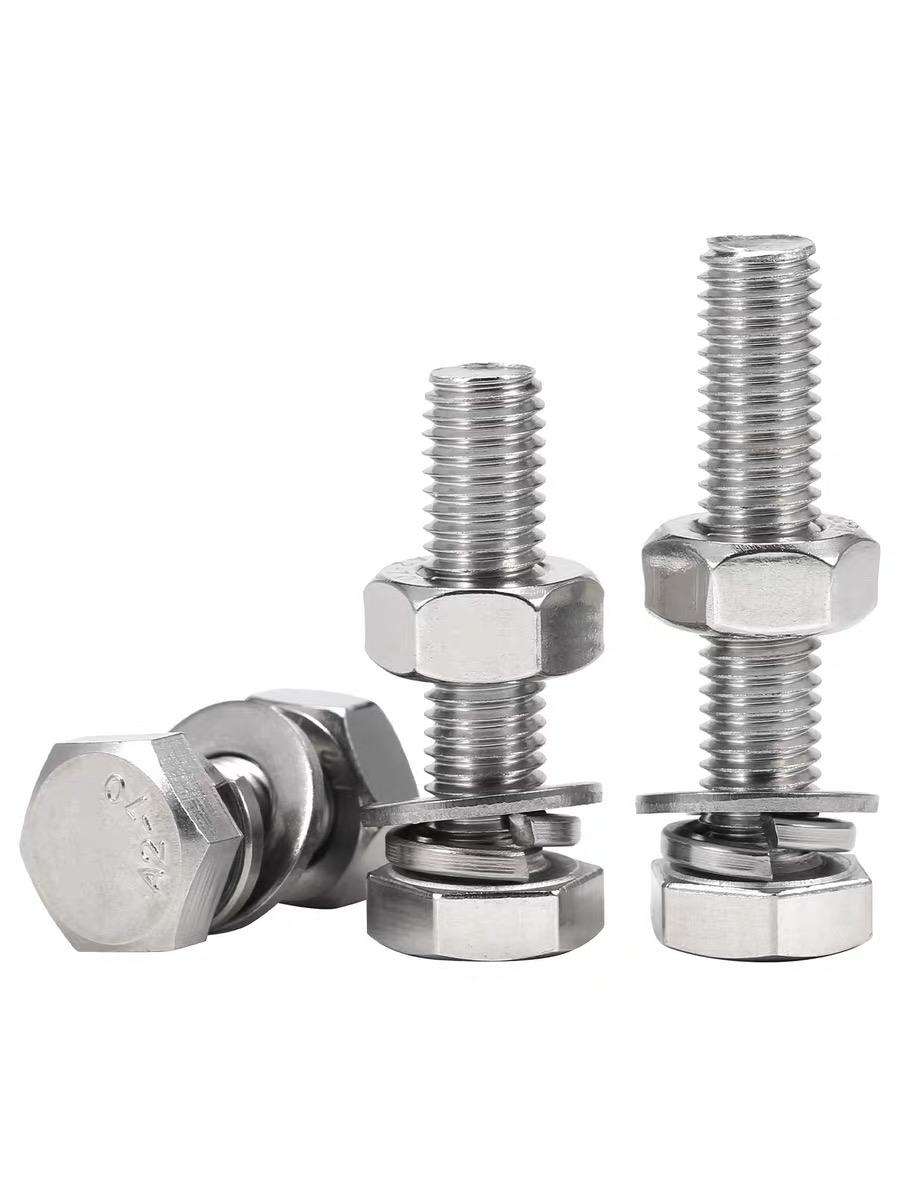
Key Takeaways
· DIN, ISO, GB, and ANSI bolts are not interchangeable — head sizes, thread lengths, and tolerance classes differ.
· DIN 931/933 and ISO 4014/4017 are essentially identical for most sizes — DIN was adopted into ISO with minor changes.
· GB (Chinese national standard) is largely based on ISO/DIN but has some unique standards like GB/T 1228 for structural bolts.
· ANSI/ASME (US standard) uses inch sizes and different head dimensions — never mix ANSI and metric bolts in the same joint.
Quick Answer
DIN and ISO are functionally identical for most hex bolts (DIN 931 = ISO 4014, DIN 933 = ISO 4017). GB is the Chinese national standard, often metric but with different tolerances. ANSI/ASME is inch-based. Mixing standards in the same joint causes fit and strength mismatches.
"We need M16 hex bolts, DIN standard." That's what the buyer says. But which DIN? DIN 931? DIN 933? DIN 6914? And does it matter if the supplier sends ISO 4014 instead?
It does matter — and not just for pedantic reasons. Different standards mean different head sizes, different thread lengths, different tolerance classes. Put the wrong bolt in a structural joint and you might have a wrench that doesn't fit, or a thread engagement that's too short.
After years of sourcing across Europe, North America, and Asia, I've learned to navigate these standards. Here's a practical guide for buyers.
A buyer in Australia once ordered "M16 hex bolts" and received GB/T 5782 bolts instead of DIN 931. The dimensions looked identical, but the GB standard allowed a wider tolerance on head height — 0.5mm difference. When the bolts arrived, the socket wrench didn't fit properly on 12% of the bolts, and the structural engineer rejected the batch because the head bearing area was below specification. The return shipping and re-order cost AUD 6,200 and delayed the project by 3 weeks. Always specify the exact standard number on the PO — "hex bolt" isn't enough.
The $8,500 Mix-Up That Could Have Been Avoided
A customer in Australia ordered "M16 hex bolts" without specifying DIN 931 or DIN 933. The supplier shipped DIN 933 (full thread). In a structural joint, full thread means the thread root sits in the shear plane — the bolt fails at 78% of design load. The customer's engineer caught it before installation, but returning the goods cost $8,500 in freight and 3 weeks delay. We now send a standard confirmation sheet with every order: standard, thread type, tolerance, coating. No surprises.
The Four Main Standard Families
DIN (Deutsches Institut für Normung) — German Standard
DIN is the most widely referenced standard in Europe and much of the world. The most common DIN bolt standards:
- DIN 931 — Hex bolt, half thread (shank has a smooth unthreaded portion). View DIN 931 specs
- DIN 933 — Hex bolt, full thread (threads run to the underside of the head). View DIN 933 specs
- DIN 6914 — High-strength structural hex bolt, grade 10.9, large series
- DIN 6921 — Hex flange bolt
- DIN 912 — Socket head cap screw (allen key)
ISO (International Organization for Standardization)
ISO standards are meant to be global. In practice, ISO bolt standards are nearly identical to DIN — because ISO adopted many DIN standards with minor modifications:
- ISO 4014 = DIN 931 (hex bolt, half thread) — functionally identical
- ISO 4017 = DIN 933 (hex bolt, full thread) — functionally identical
- ISO 898-1 — Mechanical properties of fasteners (grades 4.8, 8.8, 10.9, 12.9)
- ISO 4042 — Electroplated coatings (includes hydrogen embrittlement requirements)
For most practical purposes, DIN 931 and ISO 4014 are interchangeable. The dimensions match, the tolerances match, the materials match. If a supplier quotes ISO 4014 when you asked for DIN 931, it's usually fine — just confirm the grade and coating match.
GB (Guobiao — Chinese National Standard)
GB standards are China's national standards. Most GB fastener standards are derived from ISO/DIN, but there are some important differences:
- GB/T 5782 = DIN 931 / ISO 4014 (hex bolt, half thread)
- GB/T 5783 = DIN 933 / ISO 4017 (hex bolt, full thread)
- GB/T 1228 — Large hex head structural bolt, grade 10.9/8.8 (unique to China, similar to DIN 6914 but not identical)
- GB/T 3632 — Torsional shear type high-strength bolt (unique to China, used in steel structure)
- GB/T 3098.1 = ISO 898-1 (mechanical properties)
The key GB-specific standard is GB/T 1228 — large hex head structural bolts. These have a larger head than standard DIN hex bolts, requiring a larger wrench. They're commonly used in Chinese steel construction projects. If you're sourcing for a project that specifies GB/T 1228, don't substitute DIN 931 — the head won't fit the standard wrench sizes used on site.
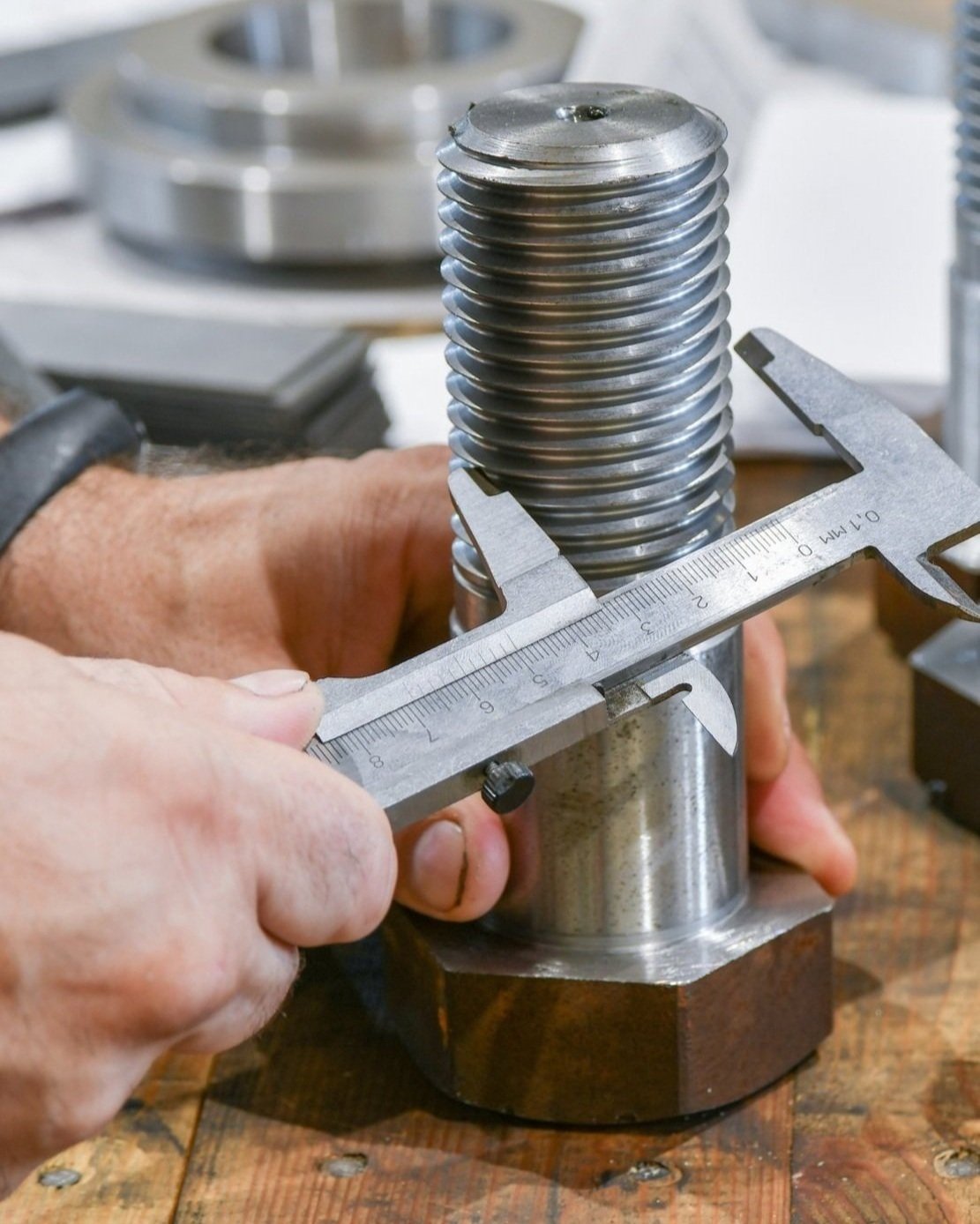
▲ Head dimension check — DIN, ISO, GB, and ANSI bolts have different head sizes and wrench flats
ANSI/ASME (American National Standards Institute)
ANSI/ASME standards are used primarily in the United States and Canada. The big difference: ANSI bolts use inch sizes, not metric. Common standards:
- ANSI/ASME B18.2.1 — Square and hex bolts (inch sizes: 1/4", 5/16", 3/8", up to 4")
- SAE J429 — Mechanical properties (grades 2, 5, 8 — roughly equivalent to 5.8, 8.8, 10.9)
- A325 / A490 — Structural bolts (ASTM standards, used in US steel construction)
Never mix ANSI (inch) and metric bolts in the same application. The thread pitches are different, the head sizes are different, and the strength grades don't map directly. If your project uses metric design, source metric bolts. If it uses inch design, source ANSI bolts.
Quick Reference: Which Standard Maps to Which?
| Type | DIN | ISO | GB | ANSI/ASME |
|---|---|---|---|---|
| Hex bolt, half thread | DIN 931 | ISO 4014 | GB/T 5782 | B18.2.1 (inch) |
| Hex bolt, full thread | DIN 933 | ISO 4017 | GB/T 5783 | B18.2.1 (inch) |
| Structural bolt | DIN 6914 | ISO 7412 | GB/T 1228 | A325 / A490 |
| Flange bolt | DIN 6921 | ISO 4162 | GB/T 5789 | B18.2.1 |
| Socket head cap screw | DIN 912 | ISO 4762 | GB/T 70.1 | B18.3 |
What This Means for Buyers
When sourcing fasteners, the standard you specify determines:
- Head size and wrench fit — Different standards have different head widths. A DIN 931 M16 has a 24mm head; an ANSI 5/8" has a 15/16" (23.8mm) head. Close, but not the same.
- Thread length — DIN 931 (half thread) has a specific unthreaded shank length; DIN 933 is fully threaded. Using full-thread bolts where half-thread is specified can reduce shear strength.
- Tolerance class — Most metric bolts are 6g, but some standards default to different classes. Always confirm.
- Availability and price — DIN/ISO/GB standards are widely produced in China and competitively priced. ANSI inch-size bolts are less common in Chinese factories and may cost more.
For a deeper dive into the most common comparison, see our DIN 933 vs DIN 931 technical deep dive. And if you're bridging between US and European supply chains, our ANSI vs DIN sourcing guide covers the practical implications.
▲ Standard hex bolts and nuts — the standard stamped on the box matters more than you might think
How We Handle Mixed Standards in One Order
It's common for a customer to need DIN 933 for one assembly and ANSI B18.2.1 for another — because their end product uses both metric and inch components. We run them on separate production lines and segregate them throughout the entire process: separate wire bins, separate heading machines, separate heat treatment batches, separate plating barrels, and separate packaging areas. Each box gets a colored label — blue for metric, red for inch — so the warehouse team can tell at a glance.
The biggest risk is mixing at the packaging stage. We use a vision system that photographs the head marking on every bolt before it goes into the box. DIN bolts show "8.8" or "10.9" — ANSI bolts show three radial lines for grade 5 or six lines for grade 8. If the system sees the wrong marking, the bolt is ejected. Last year, we shipped 120 containers with mixed standards — zero mixing complaints. That's not luck. That's process control.
Common Standard Mix-Ups We See Every Month
The most common mistake we see is buyers ordering "M16 hex bolts" without specifying the standard. DIN 933, ISO 4017, and GB/T 5783 are all full-thread hex bolts — but they have different tolerance classes. DIN is 6g, GB is often 6H, and the head height tolerance differs by up to 0.5mm. If your assembly fixture is designed for DIN head height, GB bolts might not seat properly.
Another mix-up: ANSI/ASME B18.2.1 grade 5 bolts look similar to metric grade 8.8 — both have three radial lines on the head. But grade 5 is inch-sized (1/2"-13 UNC) with 120,000 psi tensile, while grade 8.8 is metric (M12 x 1.75) with 800 MPa tensile. They are not interchangeable. We color-code our packaging by standard — blue for metric DIN/ISO, red for ANSI inch, green for GB — so our warehouse team never ships the wrong standard.
FAQ
Q: Can I substitute ISO 4014 for DIN 931?
A: Yes, for all practical purposes. ISO 4014 and DIN 931 have identical dimensions, tolerances, and material requirements. The only difference is the standard number printed on the packaging. If your project requires "DIN 931" specifically for documentation, ask the supplier to label it as DIN 931 — most factories can certify to either standard.
Q: Are GB/T 5782 and DIN 931 the same?
A: Essentially yes — GB/T 5782 is adopted from ISO 4014, which is identical to DIN 931. Dimensions and tolerances match. But here's the catch: GB/T 1228 (structural bolt) is NOT the same as DIN 6914 — the head dimensions differ slightly.
Q: Can I use metric bolts in a project designed for ANSI inch bolts?
A: No. The thread pitches don't match (metric coarse vs UNC/UNF), the hole sizes differ, and the strength grades don't map directly. Using metric bolts in an inch-designed joint can lead to thread stripping, improper fit, and structural failure.
Q: Which standard should I specify for global sourcing?
A: If you have a choice, ISO or DIN is the most globally available and cost-effective. Chinese factories produce DIN/ISO/GB bolts in massive volumes, keeping prices competitive. ANSI inch bolts are more expensive and have longer lead times when sourced from Asia.
Q: Do all standards require the same testing?
A: The mechanical property standards (ISO 898-1, GB/T 3098.1, SAE J429) are similar but not identical. Test methods, sampling rates, and acceptance criteria vary. Always specify which property standard applies to your order, and request test reports to that standard.
Standards exist to make sure the bolt you order is the bolt you get. Specify the right one, and you'll avoid a lot of headaches on the receiving dock.
Need a Quote? Talk to Our Fastener Engineers
Email: [email protected]
WhatsApp / Phone: +86 185 3100 9807
Factory: No. 668 Longyuan Street, Yongnian District, Handan City, Hebei Province, China
✅ 180-day free warehouse storage | ✅ 96-hour stock delivery | ✅ Mixed container small orders | ✅ ISO 9001 / 14001 / 45001 certified