Key Takeaways
· Vibration is the #1 cause of bolt loosening — 80% of fastener failures in vibrating equipment are due to self-loosening, not overload.
· Spring washers (split lock washers) do NOT prevent loosening in high-vibration environments — they can actually make it worse by digging into the contact surface.
· Flange bolts, nylon insert lock nuts, and thread locker are the three most effective anti-vibration solutions — choose based on vibration severity and service temperature.
· Proper torque is essential: under-torqued bolts loosen faster; over-torqued bolts can yield and lose clamp force. Always use a calibrated torque wrench.
Quick Answer
In vibration environments, spring washers and lock washers often fail — they lose preload within the first 1,000 cycles. The right solutions are: flange bolts (larger bearing area), thread locker (medium strength for most), Nord-Lock washers (for critical), and proper torque with torque-angle method. Preload is everything.
You tighten a bolt to spec. You check it again. Three months later, it's loose. And the one next to it? Also loose. You retighten, and three months later it happens again.
If this sounds familiar, you're dealing with vibration-induced loosening — the most common fastener failure in machinery, vehicles, and any equipment that moves. I've seen it on construction equipment, agricultural machinery, even wind turbines. The good news: it's preventable, if you specify the right fastener from the start.
A mining operator in Australia had a conveyor system that shook itself apart every 3 months — 40+ bolts would come loose per maintenance cycle. They were using spring washers with grade 8.8 bolts, torqued with an impact gun. We switched them to grade 10.9 flange bolts with medium-strength thread locker, installed with calibrated torque wrenches. Result: zero loose bolts in 14 months. The spring washers were the problem — they actually reduced preload by 15% compared to a flat washer in vibration testing.
The Vibration Failure That Cost a Mine $40,000
A mining operation in Chile used spring washers on vibrating screen bolts. The bolts loosened every 6 weeks, causing 8-hour shutdowns each time. We recommended switching to flange bolts with nylon insert lock nuts — wider bearing surface distributes clamp load, nylon insert prevents rotational loosening. They changed 240 bolts on one screen, and the first inspection after 6 months showed zero loose bolts. Annual downtime savings: $40,000.
Why Bolts Loosen Under Vibration
A bolted joint works because of clamp force — the bolt stretches slightly when tightened, pulling the joint together. As long as that clamp force is higher than the forces trying to separate the joint, the bolt stays tight.
Vibration breaks this in two ways:
- Transverse vibration (side-to-side movement) causes the bolt head or nut to rotate slightly with each cycle. Over thousands of cycles, those tiny rotations add up, and the bolt backs off.
- Longitudinal vibration (up-and-down movement) causes the joint to separate momentarily, reducing clamp force. When the joint closes again, the bolt can shift.
Transverse vibration is by far the bigger problem. The Junker test (the standard lab test for vibration loosening) applies transverse vibration and measures how many cycles it takes for a bolt to lose clamp force. A standard hex bolt with a flat washer can lose 50% of its clamp force in under 100 cycles.
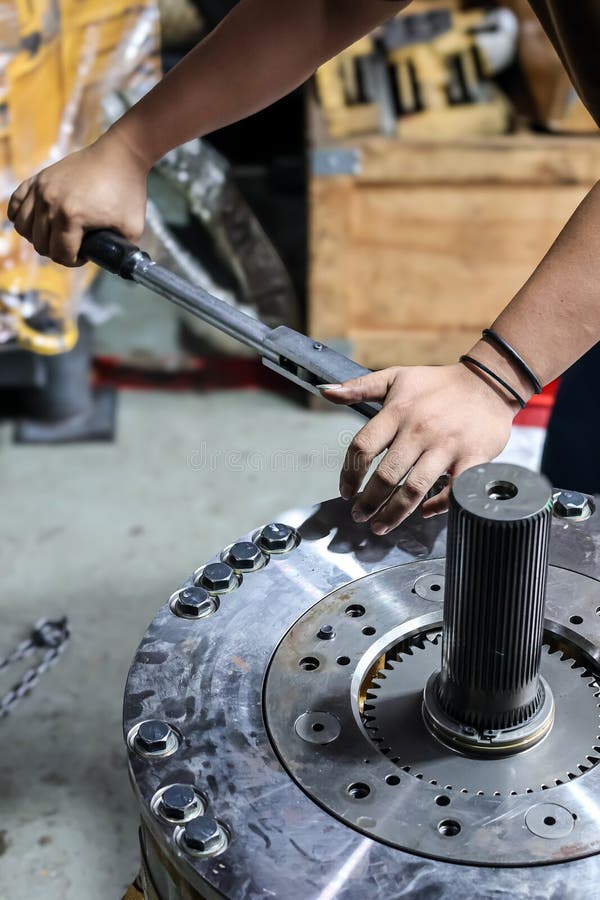
▲ Proper torque is the first line of defense against vibration loosening — but it's not enough by itself
What Doesn't Work (And Why)
Spring Washers (Split Lock Washers)
This is the most common mistake. Buyers specify spring washers thinking they prevent loosening. They don't — at least not in high-vibration environments.
A spring washer works by exerting a small spring force against the nut. But under vibration, that spring force is tiny compared to the clamp force of the bolt. Worse, the sharp ends of the spring washer can dig into the contact surface, creating a burr that actually makes it easier for the nut to rotate. Multiple independent studies (including the classic Junker test results) show spring washers perform no better than — and sometimes worse than — flat washers under vibration.
For more on this, see our detailed article on why spring washers fail.
Double Nuts
Two nuts jammed against each other can work in low-vibration static applications, but they're unreliable under sustained vibration. The second nut needs to be tightened to exactly the right preload — too loose and it doesn't jam; too tight and it yields the first nut. In practice, field installation is inconsistent.
What Actually Works
1. Flange Bolts
A flange bolt has an integrated washer-like flange under the head. The larger contact area distributes clamp force more evenly, and the flange's serrated underside (when specified) bites into the joint surface, creating a mechanical lock.
Flange bolts are my go-to for medium-vibration applications — engines, compressors, construction equipment. They're cheaper than specialty lock nuts and easier to install (no separate washer to lose).
We supply grade 10.9 flange bolts in both smooth and serrated flange versions.
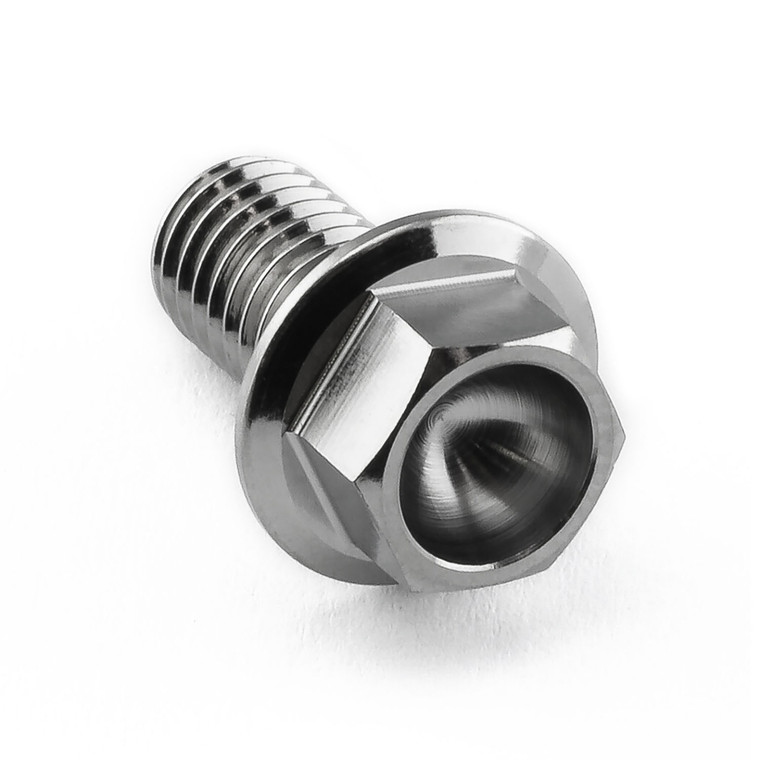
▲ Flange bolts — the integrated flange increases bearing area and resists rotation under vibration
2. Nylon Insert Lock Nuts (Nyloc Nuts)
A nylon insert lock nut has a ring of nylon at the top that grips the bolt threads, creating friction that resists rotation. They're cheap, effective, and widely available.
Limitations: the nylon starts to degrade above 120°C, so they're not suitable for high-temperature applications (engines, exhausts, ovens). And they're single-use — the nylon gets deformed on first installation and loses effectiveness if reused.
3. Thread Locking Compound (Loctite)
Thread locker is an anaerobic adhesive that cures between the bolt and nut threads, creating a chemical bond. It's extremely effective — even under severe vibration — and it also seals threads against corrosion.
Use blue (medium strength, removable) for most applications. Use red (high strength, permanent) for critical joints that won't need disassembly. Never use red on bolts you might need to remove later — you'll need heat to break the bond.
4. Wedge Lock Washers (Nord-Lock Style)
Wedge lock washers use a pair of washers with cam faces that wedge together when the bolt tries to loosen. Any loosening rotation actually increases the wedge effect, tightening the joint. They're the most effective mechanical solution for severe vibration — used in wind turbines, rail, and heavy mining equipment.
They're also the most expensive option — 5-10x the cost of standard washers. But for critical joints where a loose bolt means equipment failure, they're worth every penny.
Selecting the Right Solution
| Vibration Level | Recommended Solution | Typical Applications |
|---|---|---|
| Low (static, occasional movement) | Standard bolt + flat washer, properly torqued | Structural steel, furniture, signage |
| Medium (regular machinery vibration) | Flange bolt or nylon lock nut | Pumps, compressors, HVAC, agricultural equipment |
| High (continuous severe vibration) | Thread locker + flange bolt, or wedge lock washer | Engines, construction equipment, mining machinery |
| Extreme (critical safety joints) | Wedge lock washer + thread locker + grade 10.9/12.9 bolt | Wind turbines, rail, aerospace, bridges |
The Role of Proper Torque
None of these solutions work if the bolt isn't properly torqued. Under-torqued bolts have insufficient clamp force — the joint separates under vibration, and the bolt loosens quickly. Over-torqued bolts can yield (permanently stretch), losing clamp force even though they feel tight.
Always use a calibrated torque wrench. Follow the manufacturer's torque values — or calculate them using the standard formula. For more on torque calculation and common mistakes, see our bolt torque calculation guide.
And remember: torque values depend on the bolt's lubrication condition. A dry bolt and a lubricated bolt need different torque values to achieve the same clamp force. If your spec says "lubricated," make sure the installer actually lubricates the threads.
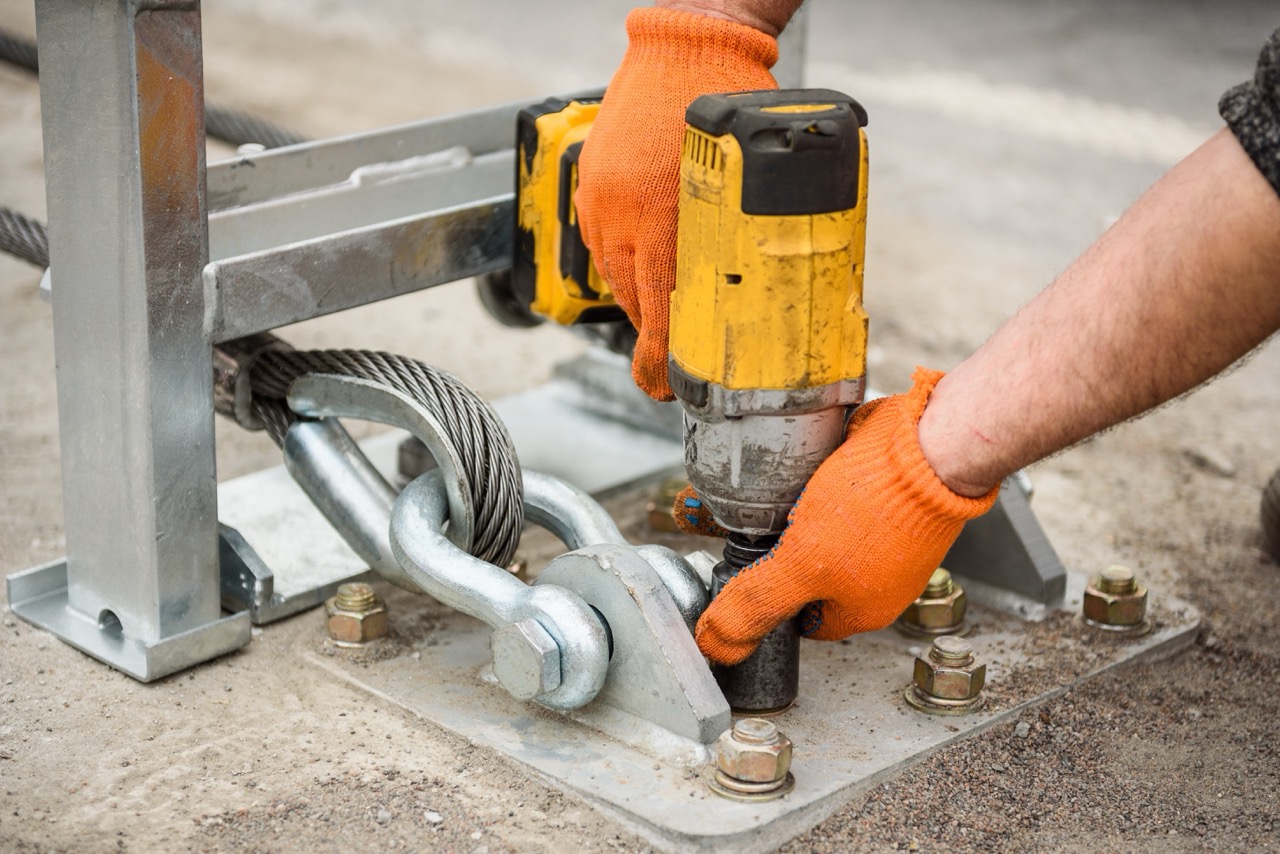
▲ Impact guns are great for speed but terrible for accuracy — always finish with a calibrated torque wrench on critical joints
FAQ
Q: Can I reuse nylon insert lock nuts?
A: Not recommended. The nylon insert deforms during first installation and loses much of its locking ability. For safety-critical applications, always use new lock nuts. For non-critical applications, a reused lock nut may still provide some locking, but it's not reliable.
Q: Does thread locker work on stainless steel bolts?
A: Yes, but stainless steel has a higher risk of galling (thread seizing) when tightened. Use an anti-seize compound or a thread locker specifically formulated for stainless (e.g., Loctite 243 or 263 with primer). Never use standard anti-seize and thread locker together — they can interfere with each other.
Q: How often should I re-torque bolts in vibrating equipment?
A: For new installations, re-torque after the first 100 hours of operation (the "settling" period). After that, inspect and re-torque every 3-6 months depending on vibration severity. If you find loose bolts regularly, your fastener specification is inadequate — upgrade to a better locking solution.
Q: Are flange bolts stronger than standard hex bolts?
A: The flange doesn't make the bolt stronger in tension — the tensile strength depends on the grade (8.8, 10.9, etc.). But the larger bearing area means the bolt can develop more clamp force before crushing the joint material, and it resists rotation better under vibration. For the same grade, a flange bolt and a standard bolt have the same tensile strength.
Q: What's the best all-around solution for medium vibration?
A: I recommend flange bolts with proper torque for most medium-vibration applications. They're cost-effective, easy to install, and reliable. If the joint is hard to access or service, add a dab of blue thread locker for extra security. For high-temperature environments above 120°C, skip the nylon lock nut and use flange bolts + thread locker rated for high temp.
Vibration doesn't have to be a constant battle. Specify the right fastener, torque it properly, and you'll spend a lot less time re-tightening bolts and a lot more time running your equipment.