Key Takeaways
· A bolt starts as steel wire and goes through 6 main stages: drawing, cold heading, thread rolling, heat treatment, coating, and inspection.
· Cold heading forms the head without removing material — the grain flow stays intact, making the bolt stronger than machining.
· Thread rolling (not cutting) produces stronger threads with smoother surfaces that resist fatigue and corrosion.
· Heat treatment (quenching + tempering) is what turns a soft 4.8 bolt into a 10.9 or 12.9 — skip it and the grade is meaningless.
Quick Answer
A bolt is made in 7 steps: wire drawing → cold heading → thread rolling → heat treatment → coating → inspection → packaging. The two steps that determine whether a bolt actually meets its grade are heat treatment and inspection — the steps cheapest suppliers skip.
Most people look at a bolt and see a simple piece of metal with a head and some threads. But walk through a bolt factory and you realize there's a lot more going on. A single DIN 933 hex bolt passes through at least six different machines before it's ready to ship.
I've walked through enough fastener factories to know which steps matter and which ones suppliers like to skip. Here's the whole process, from wire rod to finished bolt.
We once audited a factory that claimed to produce grade 10.9 bolts but had no heat treatment furnace on site. They bought grade 8.8 bolts from a neighbor, re-marked the heads as "10.9," and shipped them. The hardness test caught it immediately — HRC 26 instead of the required HRC 32-39. The buyer had already placed a $45,000 order. We caught it before shipment. That's why every batch we ship includes a hardness test report — not just a certificate of conformity.
From Wire to Bolt: A 72-Hour Rush Order
A Norwegian offshore project needed M24 x 150mm HDG hex bolts — 8,000 pieces — in 5 days. Standard lead time is 18 days. We pulled 40Cr wire from stock, ran it through our 6-station cold former at 75 ppm, heat-treated in the mesh-belt furnace overnight, HDG in our own zinc bath, and shipped on day 4. The customer's project manager said, "I didn't think anyone in China could do that." We could — because we control every step in-house.
Step 1: Wire Drawing — Getting the Right Diameter
Raw steel wire rod comes in coils, usually 5.5mm to 16mm in diameter. It's too thick and too rough for bolt making. The first step is drawing — pulling the wire through a series of tungsten carbide dies to reduce it to the exact diameter needed for the bolt size.
For an M10 bolt, you need wire of about 7.05mm. For M16, it's about 11.5mm. The drawing process also work-hardens the surface slightly and improves the surface finish. A good factory will have multiple drawing machines in series, each reducing the diameter a little bit.
What to watch for: some cheap suppliers skip the final cleaning pass after drawing, leaving residual lubricant on the wire. That causes problems later in plating.
Step 2: Cold Heading — Forming the Head
This is the most important step in bolt making. Cold heading takes a cut piece of wire and forms the head by hammering it into a die — all at room temperature, no heating required.
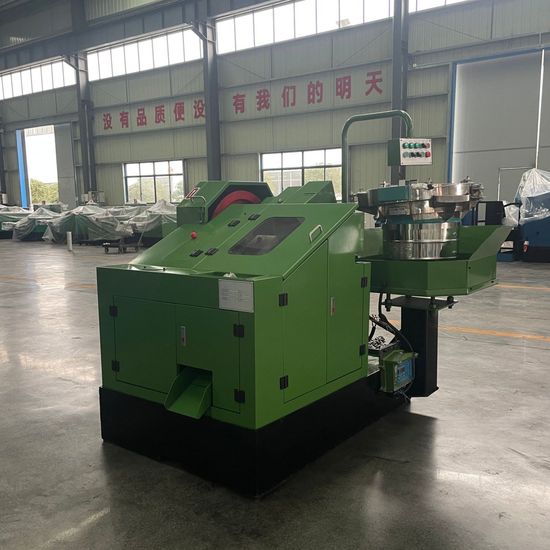
▲ A multi-station cold heading machine — each station performs one forming operation
Why cold heading instead of machining? Because cold heading doesn't remove material. The steel's grain flow follows the shape of the head, which makes the bolt significantly stronger — especially under fatigue loading. A machined bolt head has cut grain lines and is more likely to fail under the head.
Modern multi-station headers can form a hex head in 3 or 4 blows, at speeds of 80-200 pieces per minute. The first blow upsets the end, the second pre-forms the head, the third forms the hex shape, and the fourth finishes and trims.
A factory with only single-station machines can still make bolts, but they'll be slower and less consistent. When I audit a factory, I always check how many stations their headers have.
Step 3: Thread Rolling — Not Cutting
After heading, the bolt has a head but no threads. Thread rolling is the process of forming threads by pressing the shank between two rotating dies. Like cold heading, this is a forming process — no material is removed.
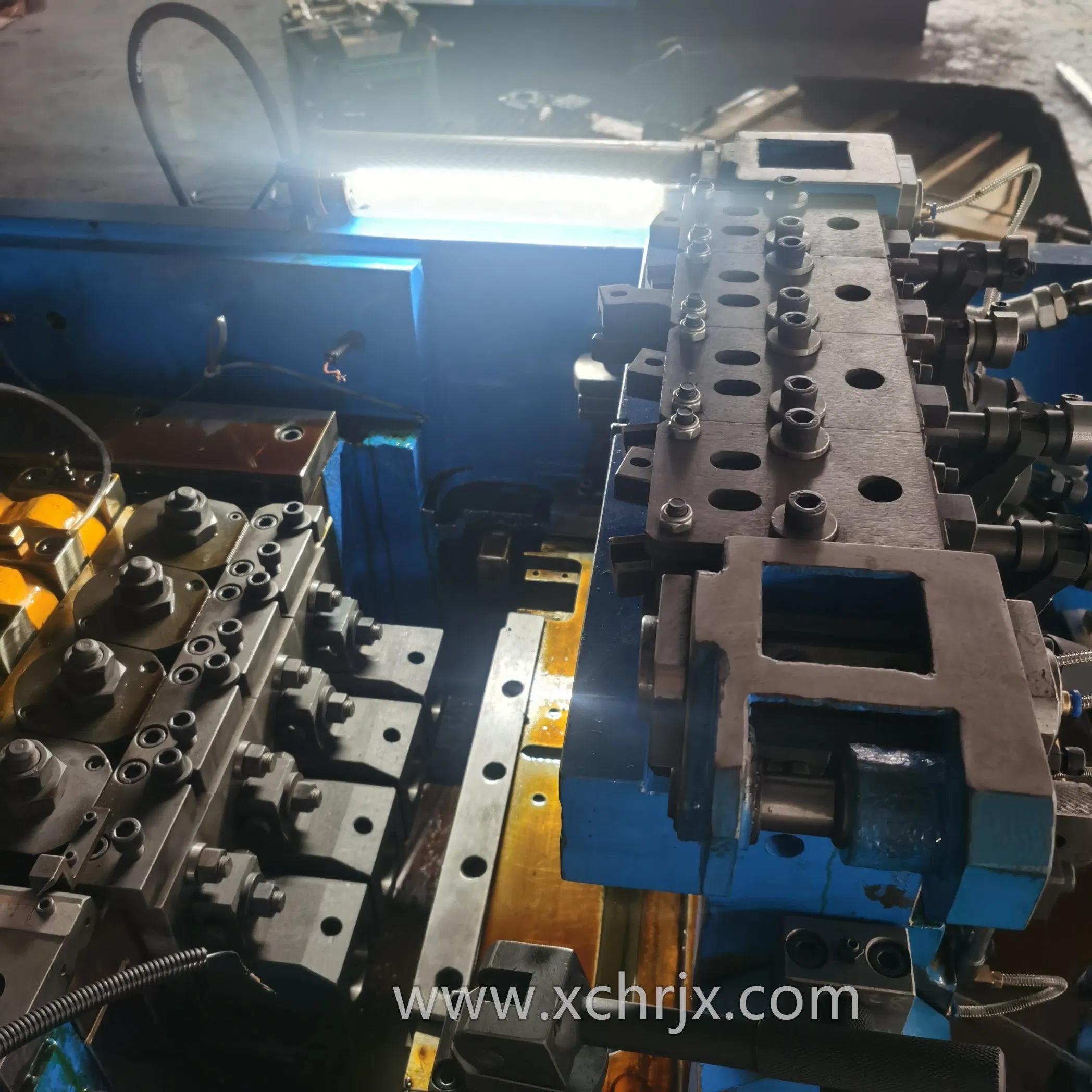
▲ Cold heading and thread rolling production — the heart of any bolt factory
Rolled threads are stronger than cut threads because the grain flow follows the thread profile. They also have a smoother surface finish, which means better fatigue resistance and less corrosion starting points. If a supplier tells you they "cut" threads on standard bolts, that's a red flag — cutting is only used for very large or custom bolts.
Thread rolling dies are expensive and wear out. A supplier who uses worn dies will produce bolts with slightly flattened thread crests. It might pass a go/no-go gauge, but it won't tighten as smoothly and may gall under load.
Step 4: Heat Treatment — Making It Strong
At this point, the bolt is fully formed but soft — roughly grade 4.8. If you need grade 8.8, 10.9, or 12.9, the bolt goes through heat treatment: quenching and tempering.
Quenching means heating the bolt to about 850-900°C (above the critical temperature) and then rapidly cooling it in oil or polymer. This creates a hard, brittle martensitic structure. Then tempering — reheating to about 400-650°C — reduces the brittleness and achieves the desired strength/toughness balance.
The exact temperature and time determine the final grade. Grade 8.8 uses a lower tempering temperature than 10.9. Grade 12.9 requires the most precise control — get the tempering wrong and you've got a bolt that's either too soft or too brittle.
For more on how grades work and what they mean for your application, see our complete guide to bolt strength grades.
Step 5: Coating — Protecting Against Rust
After heat treatment, the bolt is clean steel that will rust within days if left unprotected. Coating is the next step. The most common options:
- Electro-zinc plating — Cheap, common, but introduces hydrogen (a problem for 10.9+ bolts — see our hydrogen embrittlement article)
- Hot-dip galvanizing (HDG) — Thick zinc layer, 15-25 year outdoor life, but adds thickness to threads
- Zinc flake (Dacromet/Geomet) — Excellent corrosion resistance, no hydrogen, but more expensive
- Black oxide — Minimal protection, mainly for indoor or oiled applications
For outdoor structural applications, I almost always recommend HDG. The upfront cost is higher, but the 20-year lifecycle cost is lower. Our grade 10.9 HDG structural bolts are a popular choice for steel construction.
Step 6: Inspection and Packaging
The final step is inspection. A good factory checks: dimensions (go/no-go gauges for threads, calipers for length), hardness (Rockwell or Vickers), coating thickness (magnetic gauge), and visual defects. Batch traceability is important too — each batch should have a heat number and material certificate.
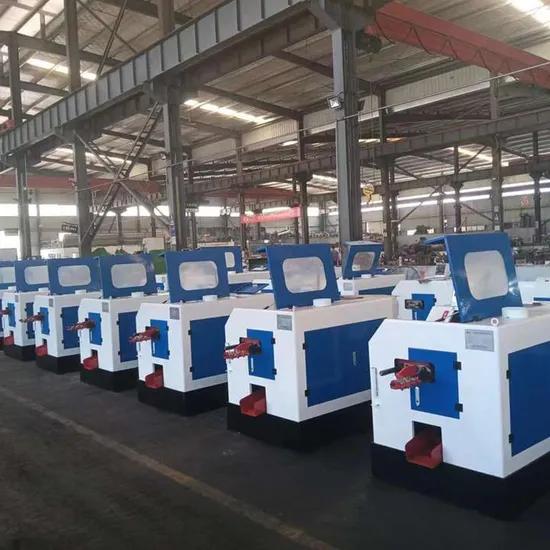
▲ A well-organized cold heading workshop — consistent output starts with consistent equipment
Then the bolts are packaged — usually in cartons or woven bags, then palletized for shipping. For export, we typically use fumigated wooden pallets or plastic pallets to meet ISPM 15 requirements.
FAQ
Q: How long does it take to make a bolt from start to finish?
A: For standard sizes, the actual processing time is a few hours per batch. But with queue time between machines and batch processing, a typical production run takes 7-15 days from raw wire to packaged finished goods.
Q: Can any size bolt be cold headed?
A: Most bolts M4-M36 can be cold headed. Above M36, hot forging is more common because the forces required exceed what cold heading machines can handle. Very small bolts (below M3) may use screw machining instead.
Q: What's the difference between rolled and cut threads?
A: Rolled threads are formed by pressing the material between dies — no material is removed, grain flow is intact, surface is smoother. Cut threads are machined, removing material and cutting across grain lines. Rolled threads are 10-20% stronger in fatigue. Standard commercial bolts always use rolled threads.
Q: Do all bolts need heat treatment?
A: No. Grade 4.8 and 5.8 bolts are used as-formed (no heat treatment). Grade 8.8 and above always require quenching and tempering. If a supplier offers "10.9" bolts without heat treatment capability, they're not really 10.9.
Q: Can I visit the factory to see the process?
A: Absolutely. We welcome customer audits at our Handan factory. Seeing the cold heading, thread rolling, and heat treatment lines in person is the best way to build confidence in your supplier. Contact us to schedule a visit.
From a coil of steel wire to a finished DIN 931 hex bolt — six steps, a dozen machines, and a lot of process control. The next time you tighten a bolt, you might appreciate it a little more.