Key Takeaways
· Hydrogen embrittlement (HE) is the #1 cause of "mysterious" high-strength bolt failures — bolts pass inspection, then snap months later.
· HE mainly affects grade 10.9 and 12.9 bolts; grade 8.8 is generally safe because the steel is softer.
· Post-plating baking at ~200°C for several hours (per ISO 4042) drives trapped hydrogen out — always ask for baking records.
· Zinc-nickel, zinc-flake, and mechanical galvanizing introduce far less hydrogen than standard electro-zinc plating.
Quick Answer
High-strength bolts that pass every lab test but snap in service are almost always hydrogen embrittlement (HE) or quench cracks. HE causes delayed fracture at loads below rated capacity — days or weeks after installation. The fix: bake after plating, specify MPI, and avoid electroplating grade 12.9.
A 12.9 bolt is the strongest one in the box. It holds more load than an 8.8, passes every inspection, and looks flawless. Then one day it breaks. No bending, no warning — just a clean, flat fracture.
I've seen this happen more times than I'd like to admit. A customer calls, confused: "We torqued it right, we used the right grade, everything checked out — why did it snap?" Nine times out of ten, the answer is the same thing.
A construction manager in Qatar called us in a panic: 23 grade 10.9 bolts had fractured on a tower crane foundation, 6 weeks after installation. Every bolt had passed factory inspection — tensile, hardness, dimensional. The failure analysis revealed hydrogen embrittlement from zinc electroplating without post-bake. The plater had skipped the 4-hour bake to meet a deadline. The crane was down for 11 days while all 480 bolts were replaced. Cost: QAR 340,000. The bake would have added 4 hours and $0.03 per bolt.
What We See on the Factory Floor
A customer in Texas once sent back a batch of 10.9 bolts because "they looked different." Our QC team checked — the head markings were correct, the hardness tested HRC 33 (within 32-37 for 10.9), but the plating batch had a slightly duller finish. The issue? A different plating line ran that batch. We now keep plating line records with every shipment and send photos before dispatch. That customer has ordered 14 containers since.
What Actually Breaks the Bolt?
The culprit is usually hydrogen embrittlement.
It sounds technical, but the idea is simple. Hydrogen is the smallest atom that exists. During zinc plating or acid cleaning, tiny amounts of it get trapped inside the steel. In a soft bolt that doesn't matter much. But when you tighten a high-strength bolt, that hydrogen migrates toward the most stressed spots — typically the first thread or the area under the head. Enough gathers there, and the steel turns brittle locally. A crack forms. It grows slowly. The bolt snaps.
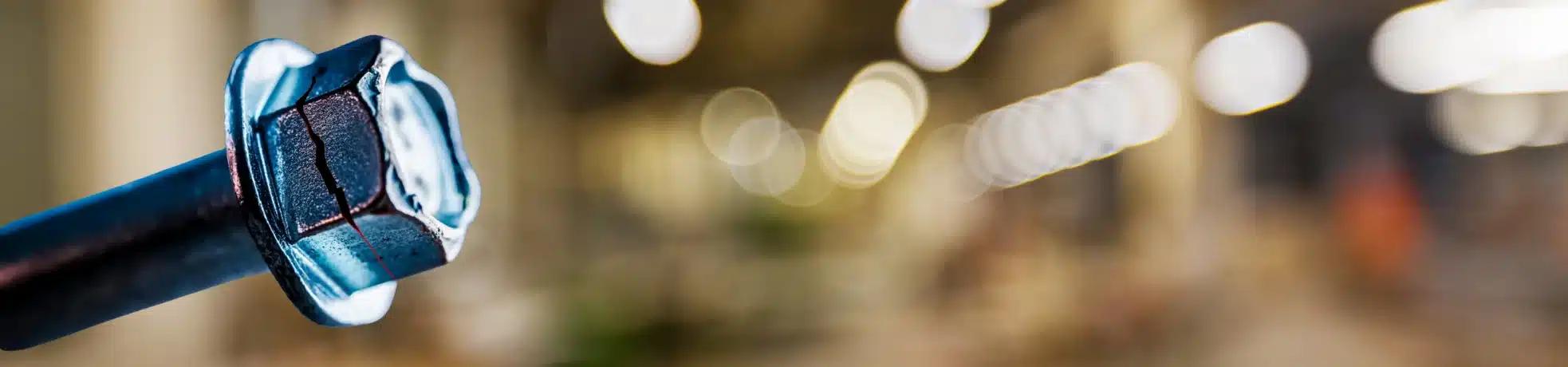
▲ A cracked high-strength bolt — this is what hydrogen embrittlement looks like at the macro level
The really frustrating part? You can't catch it with standard incoming inspection. A hardness test passes. A dimensional check passes. Even a proof load test might pass. The hydrogen is already inside, waiting for the right combination of stress and time to do its damage.
Which Grades Are at Risk?
This is really only a problem for high-strength grades. Here's how it breaks down:
- Grade 4.8 / 5.8 / 6.8 — Essentially no HE risk. The steel is too soft and ductile.
- Grade 8.8 — Low risk. Soft enough that hydrogen causes little trouble, though it's not impossible in extreme cases.
- Grade 10.9 — Sitting right on the edge. This is where you start needing to pay attention.
- Grade 12.9 — High risk. With its hard quenched-and-tempered structure, 12.9 is right in the danger zone. I'd never source 12.9 bolts without verifying post-plating treatment.
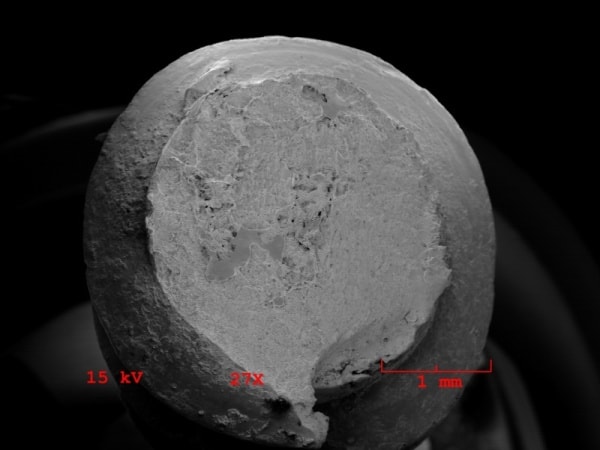
▲ SEM image of a fracture surface showing intergranular cracking — the classic signature of hydrogen embrittlement
How to Prevent It
That's why standards like ISO 4042 require baking — heating plated bolts to roughly 200°C for several hours — to drive the hydrogen out before the bolt goes into service. The timing matters too: baking should happen within a few hours of plating, before the hydrogen has time to migrate and cause damage.
If you're sourcing grade 10.9 structural bolts or high-strength socket head cap screws, ask your supplier two questions:
- What coating are you using? Zinc-nickel plating introduces less hydrogen than regular zinc. Zinc-flake (like Dacromet/Geomet) and mechanical galvanizing introduce almost none.
- Do you bake after plating? Can you show records? A supplier who can show baking records is one who actually does the work. A supplier who says "yes, of course" but can't produce documentation? I'd walk away.
For more detail on prevention methods, see our complete hydrogen embrittlement prevention guide. If you're trying to understand which grade you actually need for your application, our grade 8.8 / 10.9 / 12.9 comparison walks through the trade-offs.
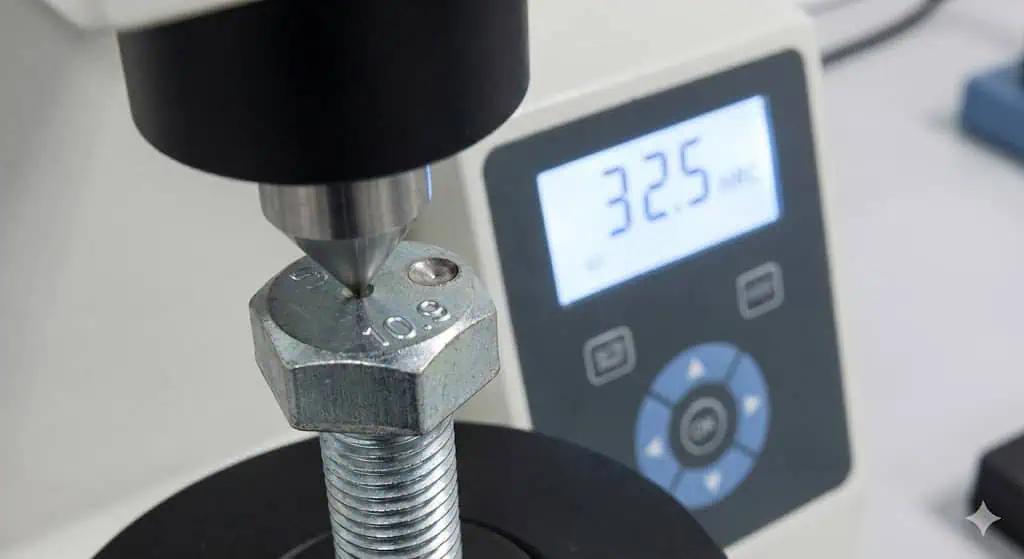
▲ Hardness testing alone won't catch hydrogen embrittlement — you need process controls, not just end-of-line inspection
A Real-World Example
A few years back, a customer in the construction industry had a batch of 12.9 anchor bolts fail about four months after installation. They'd passed every incoming test. The failure analysis came back: hydrogen embrittlement from improper plating. The supplier had skipped the baking step to save time and cost.
The fix wasn't complicated — switch to a supplier who bakes properly and can prove it. But the cost of that one bad batch? Rework, crane time, project delay, and a serious hit to the customer's confidence. All because someone skipped a 200°C heat treatment that takes a few hours.
You can read more about how bolts are made — including the plating and heat treatment steps — in our bolt manufacturing process guide.
FAQ
Q: Can hydrogen embrittlement be detected before the bolt fails?
A: Not reliably with standard inspection. Hardness and dimensional tests pass. Specialized tests like sustained load testing or slow strain rate testing can detect susceptibility, but these are expensive and not practical for every batch. Process control (baking records, coating type) is the real defense.
Q: Does hot-dip galvanizing cause hydrogen embrittlement?
A: HDG can introduce some hydrogen during the pickling step, but the high temperature of the galvanizing bath (~450°C) effectively bakes the hydrogen out. HDG is generally considered low-risk for HE, though pickling should still be controlled for 12.9 parts.
Q: How long after installation can HE failure occur?
A: Typically within hours to months. Most failures happen within the first 6 months. If a bolt survives the first year without failure, HE is unlikely to be the cause of any later problem.
Q: Should I avoid grade 12.9 bolts entirely?
A: No — 12.9 bolts are essential for high-load, weight-sensitive applications. The key is sourcing from a supplier who controls the plating process and can provide baking records. We supply grade 10.9 structural bolts with full process documentation.
A good bolt doesn't just need to be strong — it needs to stay strong after it leaves the factory.