Key Takeaways
· When a project spans multiple fastener families, the biggest risk isn't finding suppliers — it's losing control of standards, inspection records, and delivery dates across scattered vendors.
· A portfolio approach groups fasteners by application (structural, stainless, high-strength, custom) and assigns each group to a supplier verified for that category — not a one-size-fits-all vendor.
· Consolidating to 1-2 capable suppliers reduces administrative overhead by 40-60%, improves quality consistency, and unlocks volume pricing and mixed-container shipping.
· The right portfolio partner offers: multi-standard capability (DIN/ISO/GB/ANSI), in-house lab testing, 180-day free storage, mixed-container shipping, and a single point of contact for all fastener lines.
Quick Answer
Most buyers use 5-11 fastener suppliers and spend more time chasing them than managing the project. Consolidating to 1-2 capable integrated suppliers reduces admin cost by 40-60%, improves quality consistency, and unlocks mixed-container shipping. The right partner handles multiple standards, grades, and coatings from one source.
A mid-sized construction company in the Middle East once sourced fasteners from 11 different suppliers. Structural bolts from one vendor, stainless steel from another, flange bolts from a third, custom items from a fourth — and so on. Each supplier had its own quality standards, its own packaging, its own documentation format, and its own delivery schedule.
The result? A warehouse full of mismatched parts, inspection reports in six different formats, and a construction delay when three suppliers all missed their delivery windows in the same month. The procurement manager told me: "We spent more time chasing suppliers than managing the project."
That's the problem a sourcing portfolio solves. Instead of treating each fastener type as an independent purchase, you group them into a structured portfolio and assign each group to a supplier verified for that category. The goal isn't to find the cheapest source for each individual part — it's to build a supply chain that's reliable, traceable, and manageable.
After helping dozens of buyers consolidate their fastener sourcing, here's the practical framework for building and comparing a fastener sourcing portfolio.
Sourcing Portfolio: Why One Supplier Isn't Enough
A buyer in the UK sourced all fasteners from one factory in China. When that factory had a fire and shut down for 3 months, his production line stopped. We helped him build a dual-source strategy: 70% from our Yongnian factory (standard parts), 30% from a second qualified factory (custom parts). We audit the second factory quarterly and share the reports. His supply chain hasn't been disrupted since. A sourcing portfolio isn't about playing suppliers off each other — it's about risk management.
Step 1: Map Your Fastener Portfolio by Application
Before comparing suppliers, you need to know what you're actually buying. Group your fasteners by application and performance requirement, not by part number:
| Portfolio Group | Typical Items | Key Requirements |
|---|---|---|
| Structural / High-Strength | Grade 8.8/10.9 hex bolts, structural bolt sets, HDG | MPI inspection, torque-angle, full traceability, HDG with over-tapped nuts |
| Stainless / Corrosion-Resistant | A2-70/A4-80 bolts, nuts, washers, marine grade | Material certs (3.1), salt spray test, pitting resistance, no carbon contamination |
| General Purpose / Zinc Plated | Grade 4.8/8.8 zinc plated, DIN 933/931, standard nuts/washers | Consistent quality, competitive price, fast delivery, mixed sizes |
| Custom / Special Fasteners | Non-standard sizes, special heads, custom lengths, shoulder bolts | Drawing review, tolerance control, PPAP, prototype capability |
| Automotive / IATF | Flange bolts, weld nuts, special coatings (zinc flake) | IATF 16949, PPAP, controlled friction, zero-defect mindset |
Why group by application? Because a supplier that excels at structural bolts may not be the best choice for stainless steel — and vice versa. Grouping helps you identify which suppliers have genuine capability in each category, rather than assuming one supplier can do everything well.
Step 2: Compare Suppliers on the Same RFQ
The #1 mistake in portfolio comparison is asking each supplier different questions. You can't compare responses if the RFQ fields aren't identical. Use a standardized RFQ for every supplier, with these mandatory fields:
- Part identification — standard (DIN/ISO/GB/ANSI), grade, size, coating, quantity
- Material certification — EN 10204 3.1? 3.2? Mill test reports available?
- Inspection documents — dimensional report, hardness test, coating thickness, salt spray (if applicable)
- Packaging — carton quantity, pallet configuration, labeling standard, export packaging
- Lead time — production days + inspection days + shipping. Break it down, don't accept a single number.
- Price terms — FOB? CIF? DDP? Currency? Payment terms? Volume tiers?
- Capacity — monthly production capacity for this item? Current utilization? Buffer stock?
- Quality system — ISO 9001? IATF 16949? In-house lab? Third-party inspection accepted?
Use our 12-field RFQ checklist to structure every request. When all suppliers respond to the same fields, you can compare them side by side — and missing information becomes visible immediately. A supplier that can't provide a material certificate or hardness test report is telling you something about their quality system.
Step 3: Evaluate Total Cost of Ownership, Not Unit Price
The cheapest unit price is rarely the cheapest total cost. When comparing suppliers, calculate the total cost of ownership for each portfolio group:
Total Cost = Unit Price × Quantity
+ Tooling / NRE (for custom items)
+ Inspection / Testing costs (if not included)
+ Packaging / Export crating
+ Shipping / Freight / Insurance
+ Customs / Duties / Taxes
+ Inventory carrying cost (storage, insurance, obsolescence)
+ Quality failure cost (rejection, rework, delay, warranty)
+ Administrative cost (PO processing, inspection, supplier management)
I've seen cases where Supplier A was 15% cheaper per unit than Supplier B — but Supplier A had a 5% rejection rate (requiring 100% incoming inspection), 2-week longer lead times (requiring safety stock), and inconsistent packaging (causing damage in transit). When you added it all up, Supplier B was 8% cheaper in total cost. The unit price lied; the total cost told the truth.
For more on TCO analysis, see our fastener TCO sourcing guide — the story of a German procurement manager who learned this the hard way.
Step 4: Build the Portfolio — Consolidate Where It Makes Sense
After evaluating suppliers, you'll typically land on one of three portfolio structures:
Structure A: Single Integrated Supplier
One supplier handles all fastener groups. This works when the supplier has genuine multi-category capability — structural, stainless, general purpose, and custom — with in-house production or controlled subcontracting for each group.
Pros: Lowest administrative overhead, single point of contact, mixed-container shipping, volume pricing across all items, consistent documentation format.
Cons: Single point of failure (if the supplier has issues, your entire supply chain is affected). May not be the absolute cheapest in every category.
Best for: Mid-sized buyers (50-500 SKUs) who value reliability and simplicity over rock-bottom pricing.
Structure B: Primary + Backup Supplier
One primary supplier handles 70-80% of the portfolio; a secondary supplier handles the remaining 20-30% (usually the categories where the primary isn't strongest) and serves as a backup for critical items.
Pros: Redundancy for critical items, competitive tension keeps pricing honest, each supplier focuses on their strength.
Cons: More administrative work than single supplier, need to manage two relationships and two documentation systems.
Best for: Larger buyers (500+ SKUs) or buyers in critical industries (construction, automotive) where supply chain redundancy is essential.
Structure C: Specialist Suppliers by Category
Each portfolio group assigned to the specialist supplier for that category — structural from a structural specialist, stainless from a stainless specialist, custom from a custom shop.
Pros: Best-in-class capability in each category, potentially lowest unit price per category.
Cons: High administrative overhead, multiple documentation formats, no mixed-container shipping (each supplier ships separately), difficult to coordinate delivery schedules.
Best for: Very large buyers (5000+ SKUs) with dedicated procurement teams, or buyers with highly specialized requirements that only a specialist can meet.
For most overseas buyers importing from China, Structure A (single integrated supplier) or Structure B (primary + backup) delivers the best balance of cost, reliability, and manageability. The 11-supplier chaos I described earlier? They consolidated to a single integrated supplier and reduced their total fastener cost by 18% while improving on-time delivery from 72% to 96%.
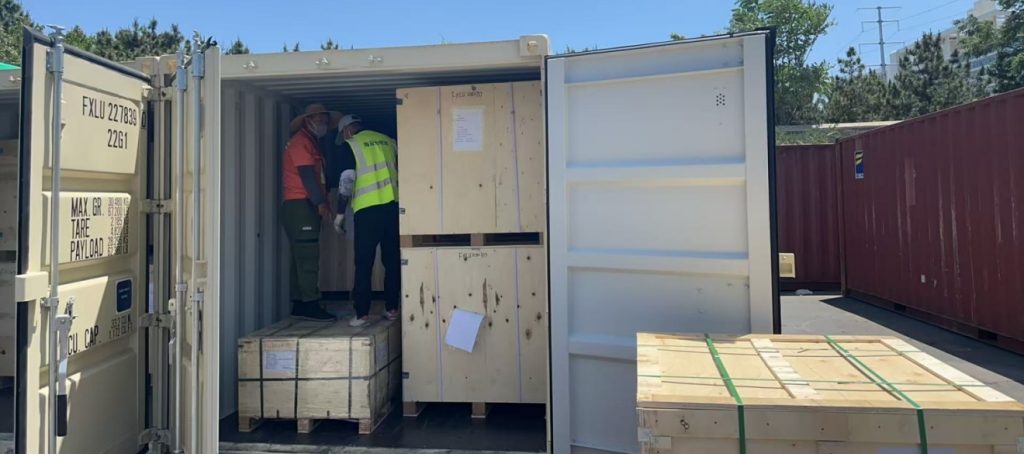
▲ Mixed-container loading — a single integrated supplier can combine structural bolts, stainless fasteners, and custom items into one container, reducing shipping cost by 30-50% vs separate shipments
Step 5: Audit the Portfolio Supplier's Real Capability
Don't trust a supplier's website or sales pitch. Verify their capability with these checks:
Factory Audit (In-Person or Virtual)
- Production equipment — cold heading machines? Thread rolling? Heat treatment furnace? Plating line? In-house or outsourced?
- Quality lab — hardness tester? tensile tester? salt spray chamber? MPI machine? coating thickness gauge?
- Warehouse — organized by part number? FIFO system? Climate control? Stock levels visible?
- Staff — quality engineers? Technical sales? Dedicated export team?
Document Verification
- ISO 9001 certificate (valid? covers fastener manufacturing?)
- IATF 16949 (if automotive items are in the portfolio)
- Sample material certificates (EN 10204 3.1) — verify the format, the test values, and the steel mill origin
- Sample inspection reports — dimensional, hardness, coating thickness
- Customer references — ask for 2-3 overseas customers in similar industries and contact them
Trial Order
Place a small trial order (1-2 items, 500-2000 pieces) before committing to the full portfolio. Evaluate: response time, quotation accuracy, production lead time vs promised, packaging quality, documentation completeness, and product quality (incoming inspection).
Use our supplier audit checklist for a complete evaluation framework.
Step 6: Manage the Portfolio for Continuous Improvement
A sourcing portfolio isn't a set-it-and-forget-it exercise. Manage it actively:
Quarterly Business Reviews
Meet with your portfolio supplier every quarter to review: on-time delivery rate, quality rejection rate, cost reduction opportunities, new product introductions, and any issues from the previous quarter. This keeps the relationship accountable and surfaces problems before they become crises.
Scorecard Tracking
Track these metrics monthly and share with the supplier:
- On-time delivery rate (target: >95%)
- First-pass quality rate (target: >98%)
- Documentation completeness (target: 100% of shipments with full certs)
- Response time to inquiries (target: <24 hours)
- Price competitiveness (annual benchmarking against market)
Inventory Collaboration
Share your demand forecast with the portfolio supplier. If they know your annual usage and seasonal patterns, they can pre-produce and hold buffer stock — reducing your lead times from 4-6 weeks to 48-96 hours for stock items. Yuanpai offers 180-day free warehouse storage for confirmed orders, which means you can place a bulk order, take delivery as needed, and only pay for what you ship. See our inventory planning guide for details.
Continuous Improvement Projects
Work with the supplier on cost reduction and quality improvement: packaging optimization (reducing damage), coating standardization (reducing SKUs), process automation (reducing cost), and new product development. A good portfolio supplier will propose improvements proactively — if they don't, ask.
Yuanpai's Portfolio Capability
As an integrated fastener manufacturer based in Handan — China's largest fastener production cluster — Yuanpai is structured to serve as a single portfolio supplier for overseas buyers:
- Multi-standard capability — DIN, ISO, GB, ANSI/ASME, JIS. We produce metric and inch fasteners in the same facility.
- Full grade range — grade 4.8 through 12.9, plus A2-70/A4-80 stainless steel and specialty materials (35CrMoA, 42CrMo, boron steel).
- In-house heat treatment and lab — continuous mesh-belt furnace, Rockwell hardness, tensile testing, salt spray chamber, MPI inspection, coating thickness gauge.
- Coating options — zinc plating (in-house), HDG (controlled partner), zinc flake/Dacromet (certified applicator), mechanical plating.
- 40,000+ m² facility, 200+ staff, 800 tons/day throughput — capacity for both large bulk orders and small mixed batches.
- 180-day free storage + 96-hour stock dispatch — inventory collaboration that reduces your working capital and lead time.
- Mixed-container shipping — combine structural bolts, stainless fasteners, flange bolts, and custom items in one container.
- Single point of contact — dedicated export sales engineer who knows your portfolio, your standards, and your delivery schedule.
We supply DIN 931 structural bolts, grade 10.9 structural bolt sets, stainless steel bolts, and flange bolts — all from one source, with one documentation system and one delivery schedule.
FAQ
Q: How many suppliers should I have in my fastener portfolio?
A: For most overseas buyers importing from China, 1-2 suppliers is optimal. One primary integrated supplier for 70-100% of your portfolio, plus one backup for critical items if redundancy is required. More than 3 suppliers creates administrative overhead that outweighs any pricing benefit — you'll spend more time managing suppliers than you save on unit cost. The exception is very large buyers (5000+ SKUs, $5M+ annual spend) who may benefit from 3-4 specialist suppliers with a dedicated procurement team to manage them.
Q: How do I handle a supplier that's good at one category but weak at another?
A: Don't force them to do everything. Assign the categories where they're strong, and source the weak categories from a specialist — or find an integrated supplier that's competent across all categories. The worst outcome is a supplier pretending to handle a category they're not equipped for, resulting in quality issues and delays. Be honest about each supplier's capability, and structure the portfolio accordingly. A good integrated supplier will tell you if a specific item is outside their core competence and may even recommend a trusted partner for it.
Q: What if my portfolio includes both metric (DIN/ISO) and inch (ANSI/ASME) fasteners?
A: Look for a supplier with multi-standard capability — one that produces both metric and inch fasteners in the same facility. Many Chinese fastener manufacturers are set up for metric only; sourcing inch fasteners from a metric-only supplier often means they're subcontracting to a third party with less quality control. Ask specifically: "Do you produce ANSI/ASME fasteners in-house, or are they subcontracted?" If subcontracted, ask for the subcontractor's quality records and audit trail. Yuanpai produces both metric and inch fasteners in-house, with tooling for both systems.
Q: How do I transition from multiple suppliers to a single portfolio supplier without disrupting supply?
A: Transition gradually over 3-6 months. Phase 1 (months 1-2): place trial orders with the new supplier for 2-3 non-critical items, verify quality and delivery. Phase 2 (months 2-4): move 30-50% of the portfolio to the new supplier, keeping existing suppliers for the rest. Phase 3 (months 4-6): move the remaining items, phasing out old suppliers as their open orders are fulfilled. Maintain safety stock during transition to cover any lead-time gaps. Never do a "cold turkey" switch — that's how supply disruptions happen. A good portfolio supplier will help you plan the transition and may even hold buffer stock during the switchover.
Q: How do I know if a supplier's "integrated" claim is real or just marketing?
A: Three verification steps: (1) Ask for a factory video or live virtual tour showing each production process — cold heading, thread rolling, heat treatment, plating, inspection, packaging. If they can only show you a showroom and not the production floor, they're likely a trading company. (2) Ask for material certificates and trace the steel mill — a real manufacturer buys steel directly from mills and has mill test reports; a trading company may not. (3) Ask for the production lead time breakdown by process — a real manufacturer can tell you exactly how long each step takes (cold heading: 2 days, heat treatment: 1 day, plating: 2 days, inspection: 1 day); a trading company will give you a vague "2-3 weeks." Also check: do they have their own heat treatment furnace? This is the most capital-intensive process and the best indicator of genuine manufacturing capability.
A fastener sourcing portfolio isn't about finding the cheapest bolt. It's about building a supply chain that delivers the right parts, at the right quality, on the right schedule, with documentation you can trust — across every fastener type your project needs. Map your portfolio, compare suppliers on the same RFQ, evaluate total cost not unit price, consolidate to a capable integrated supplier, and manage the relationship actively. Do that, and fasteners become the least stressful part of your procurement — not the most.