Key Takeaways
· EV battery packs use 50-200 fasteners per pack — every one must maintain clamp force for 15+ years and 1 million+ vibration cycles without loosening.
· Battery fasteners require non-magnetic materials (A2-70/A4-80 stainless, titanium, or aluminum) because magnetic fasteners can interfere with battery management system sensors and motor electronics.
· Zinc flake coatings (Geomet, Dacromet) are preferred over electroplating for battery fasteners — no hydrogen embrittlement risk, controlled electrical conductivity, and excellent corrosion resistance.
· Torque accuracy is critical: battery cell compression bolts require ±5% torque precision, achieved only with calibrated torque-angle tools — never impact guns.
Quick Answer
EV battery enclosure fasteners need: lightweight materials (aluminum or titanium where possible), controlled torque (battery seals are sensitive to over-torque), vibration resistance (EVs have constant motor vibration), and corrosion protection (coolant leaks and road salt). Grade 8.8/10.9 with zinc flake coating is the industry standard.
Open up an electric vehicle battery pack and you'll find something surprising: hundreds of fasteners. There are bolts holding the cell modules to the tray, bolts securing the busbars, bolts fastening the cooling plate, bolts for the BMS (battery management system) electronics, and bolts holding the lid. A typical EV battery pack uses 50-200 fasteners, and every single one is critical.
Why? Because a loose fastener in a battery pack isn't just a warranty issue — it's a safety issue. A loose busbar bolt causes increased electrical resistance, which generates heat, which can trigger thermal runaway. A loose module bolt allows the cells to shift under vibration, potentially damaging cell walls or electrical connections. In an EV battery pack, fastener integrity is directly tied to vehicle safety.
Having worked with EV battery manufacturers and Tier-1 suppliers, I've seen how seriously they take fastener specification. This isn't general industrial fastening — it's a specialized discipline with unique requirements. Here's what you need to know.
An EV startup in China used standard zinc-plated grade 8.8 bolts for battery pack mounting. During vibration testing (simulating 100,000 km of road use), 3 bolts loosened — the pack shifted, damaging a cooling line and causing a thermal event. The root cause: zinc plating has a variable friction coefficient (0.10-0.18), so the same torque produced inconsistent preload. We switched them to zinc flake-coated bolts with a controlled friction coefficient (0.12-0.15 per ISO 16047) and torque-angle installation. Zero loosening in retest. For EV battery packs, controlled friction isn't optional — it's a safety requirement.
EV Battery Enclosure: Why Torque Matters More Than You Think
An EV startup in California was using generic M6 bolts for their battery enclosure. During vibration testing, 4 bolts loosened — the enclosure shifted, and a cooling line cracked. We supplied A4-80 stainless flange bolts with nylon insert lock nuts, and provided a torque spec of 9 Nm (not the generic 12 Nm they were using). They passed 3-axis vibration testing on the first try. Battery enclosure bolts aren't commodity parts — they're safety-critical.
The Unique Challenges of Battery Fastening
1. Vibration and Shock
An EV battery pack is mounted low in the vehicle chassis, where it experiences constant vibration from the road, plus shock loads from potholes, curbs, and collisions. Over a 15-year, 300,000 km vehicle life, a battery fastener may experience 100 million+ vibration cycles. The fastener must maintain clamp force through all of them — no loosening, no fatigue failure.
This means standard hex bolts + flat washers aren't sufficient. Battery fasteners typically use flange bolts (integrated washer for larger bearing area), thread locker (medium-strength anaerobic adhesive), or wedge lock washers for the most critical joints. For more on vibration-resistant fastening, see our vibration environment selection guide.
2. Non-Magnetic Requirement
This is the requirement that surprises most buyers. EV battery packs contain sensitive electronics — the BMS, current sensors, Hall effect sensors, and sometimes motor controllers. Magnetic fasteners (carbon steel, even plated) can interfere with these sensors, causing inaccurate current readings or BMS errors.
For this reason, most battery fasteners are made from non-magnetic materials:
- A2-70 / A4-80 stainless steel — austenitic stainless is non-magnetic (in the annealed condition; cold working can introduce slight magnetism). The most common battery fastener material.
- Titanium (Ti-6Al-4V) — non-magnetic, high strength-to-weight ratio, but expensive. Used in high-performance EVs where weight savings justify the cost.
- Aluminum (7075-T6) — non-magnetic, lightweight, but lower strength. Used for non-structural covers and shields.
Carbon steel fasteners may be used in some structural battery tray-to-chassis connections, but only where they're physically separated from sensitive electronics and the magnetic field is verified not to interfere.
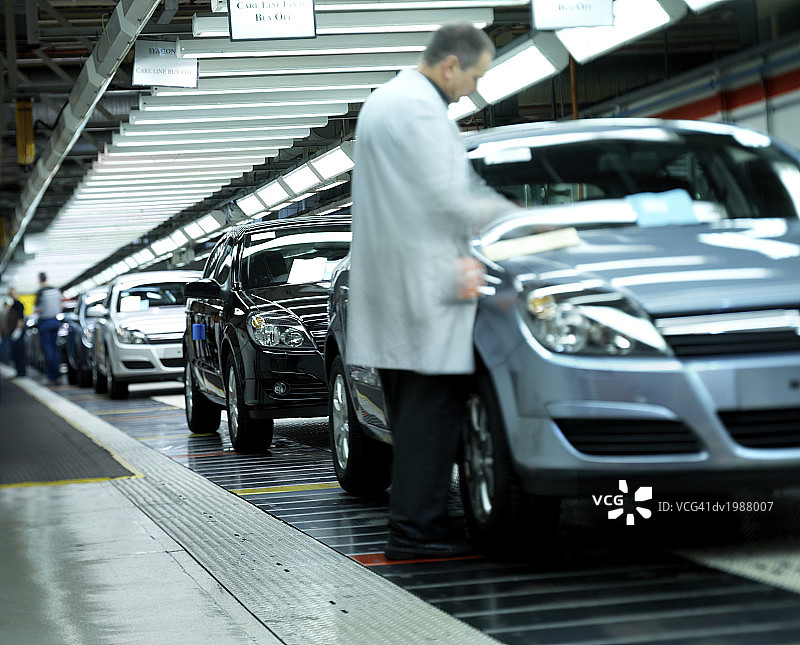
▲ EV battery pack assembly — every fastener must be non-magnetic, corrosion-resistant, and torque-verified for 15+ years of service
3. Electrical Conductivity Control
Some battery fasteners carry electrical current (busbar connections, grounding straps). Others must be electrically isolated (module mounting bolts that connect to the tray). The coating and plating must be specified to achieve the right electrical properties:
- Conductive fasteners (busbars): bare stainless steel, tin-plated, or nickel-plated for low contact resistance. Coating must not insulate the contact surface.
- Isolated fasteners (module mounting): zinc flake coating or polymer-coated for electrical isolation. May include insulating sleeves or washers.
- Grounding fasteners: must have a clean, conductive path to chassis — coating may be removed under the head or star washers used to penetrate coating.
Electrical conductivity is measured as contact resistance (micro-ohms) and must be within the OEM's specification — typically < 5 mΩ for busbar connections.
4. Corrosion Resistance
Battery packs are sealed, but they're not hermetic. Condensation can form inside the pack during temperature cycling. Road salt and moisture can enter through cooling system connections or pack seals. Fasteners inside the pack must resist corrosion for 15+ years without releasing corrosion products that could contaminate the electronics or cause electrical shorts.
Coating options for battery fasteners:
- Zinc flake (Geomet, Dacromet, Magni) — the preferred coating for battery fasteners. No hydrogen embrittlement risk, controlled conductivity, 500-1,500 hours salt spray, and thin uniform coating that doesn't affect thread fit.
- Electroplated zinc + passivate — lower cost, but hydrogen embrittlement risk for high-strength steel (not typically used in battery packs for this reason).
- Stainless steel (uncoated) — A2-70 or A4-80, natural corrosion resistance, no coating needed. Most common for battery fasteners.
- Tin or nickel plating — for electrical connections where low contact resistance is critical.
For more on coating selection and hydrogen embrittlement, see our coatings guide and hydrogen embrittlement guide.
Torque: The Critical Parameter
In an EV battery pack, torque isn't a suggestion — it's a controlled process parameter. Here's why:
Cell Compression Bolts
Many EV battery designs use bolts to compress the cell stack to a precise pressure. Too little compression = cells can swell and delaminate, reducing capacity and cycle life. Too much compression = cells are mechanically stressed, potentially causing internal short circuits. The compression force must be within ±5% of the design value.
This requires:
- Torque-angle tightening (not torque-only) for ±5% clamp force accuracy
- Calibrated tools with torque+angle monitoring (data logged for every bolt)
- Operator training and regular tool calibration (every 5,000 cycles or monthly)
- 100% torque verification — every bolt's torque and angle is recorded and traceable to the VIN (vehicle identification number)
Busbar Bolts
Busbar bolts must achieve a specific clamp force to ensure low contact resistance. Under-torqued busbars generate heat (I²R losses) and can fuse or melt under high current. Over-torqued busbars can strip threads or crack the busbar material (typically copper or aluminum).
Busbar torque values are typically lower than structural bolts (because copper/aluminum is softer than steel) and must account for the busbar material's compressive yield strength.
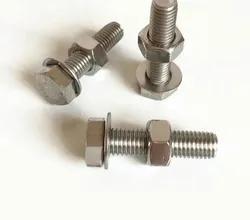
▲ Non-magnetic stainless steel fasteners — the standard for EV battery packs where magnetic interference with BMS sensors is a concern
Common Battery Fastener Types
| Application | Fastener Type | Material | Typical Size |
|---|---|---|---|
| Cell module to tray | Flange bolt or hex bolt + washer | A2-70 stainless | M6-M8 |
| Busbar connections | Hex bolt + flat washer | A2-70 / tin-plated Cu | M5-M8 |
| Cell compression | Socket head cap screw | A2-70 / titanium | M4-M6 |
| Cooling plate | Flange bolt + sealing washer | A2-70 stainless | M5-M6 |
| Pack lid / cover | Flange bolt or captive screw | A2-70 / aluminum | M5-M6 |
| Pack to chassis | Grade 10.9 structural bolt | Alloy steel + zinc flake | M10-M14 |
IATF 16949 and PPAP for Battery Fasteners
All EV battery fasteners must comply with IATF 16949 quality management and require PPAP (Production Part Approval Process) documentation. This includes:
- PFMEA (Process Failure Mode Effects Analysis) — identifying all potential fastener failures and their prevention
- Control plan — step-by-step inspection and process controls from raw material to shipping
- MSA (Measurement System Analysis) — proof that torque tools and inspection gauges are accurate
- Process capability (Cpk ≥ 1.33) for critical dimensions and torque values
- Full traceability — every fastener batch traceable to raw material, production, and inspection records
- 100% inspection for critical characteristics (dimensions, magnetic permeability, coating thickness)
For more on IATF 16949 and PPAP, see our IATF 16949 quality control article.
We supply A2-70 stainless steel bolts and zinc flake coated grade 10.9 flange bolts for EV battery applications, with full PPAP documentation and IATF 16949 compliance.
FAQ
Q: Why can't I use standard zinc-plated carbon steel bolts in a battery pack?
A: Three reasons: (1) Carbon steel is magnetic and can interfere with BMS current sensors and Hall effect sensors. (2) Zinc electroplating introduces hydrogen, which can cause hydrogen embrittlement in high-strength steel — a delayed fracture risk in a safety-critical component. (3) Carbon steel corrodes faster than stainless in the humid, condensation-prone battery pack environment, releasing iron oxide particles that can cause electrical shorts or contaminate electronics. A2-70 stainless is the standard because it's non-magnetic, corrosion-resistant, and doesn't require plating.
Q: Are all stainless steel fasteners non-magnetic?
A: Austenitic stainless steels (304/A2, 316/A4) are non-magnetic in the fully annealed condition. But here's the catch: cold working — which includes thread rolling, head forming, and wire drawing — can induce partial martensitic transformation, making the fastener slightly magnetic. For battery applications requiring strict non-magnetic performance, specify "low magnetic permeability" (μr < 1.01) and verify with a permeability meter. Some suppliers offer solution-annealed fasteners (re-annealed after forming) to restore full non-magnetic properties, though this adds cost.
Q: What torque method is used for battery cell compression bolts?
A: Torque-angle (turn-of-nut) method is the standard. The bolt is first snugged to a low torque (e.g., 2 Nm for M5), then rotated by a precise angle (e.g., 90° or 180°) to achieve the target clamp force. This method achieves ±5% clamp force accuracy, compared to ±25-35% for torque-only. Every bolt's torque and angle is measured and recorded by a smart tool, with data stored against the vehicle VIN. If a bolt is outside the acceptable torque-angle window, the tool alarms and the bolt must be replaced.
Q: How do battery fasteners handle thermal cycling?
A: EV battery packs operate from -40°C to +60°C (and higher during fast charging). This 100°C temperature range causes differential thermal expansion between the fastener (stainless steel, α ≈ 17 ppm/°C) and the joined materials (aluminum tray, α ≈ 23 ppm/°C; copper busbar, α ≈ 17 ppm/°C). The fastener must maintain clamp force through these cycles without yielding or loosening. Designers account for this by using sufficient bolt length (longer bolts stretch more and accommodate differential expansion), elastic washers (to maintain clamp force as materials expand/contract), and proper torque values. Clamp force loss over thermal cycling is verified by thermal cycle testing (typically 500-1000 cycles from -40°C to +85°C).
Q: Can battery fasteners be reused during pack servicing?
A: Generally no — most OEMs specify single-use fasteners for battery pack service. Once a battery fastener is torqued to spec, it may have yielded slightly (especially torque-angle tightened bolts) and may not achieve the same clamp force on reinstallation. For safety-critical joints (cell compression, busbars), always replace the fastener during service. For non-critical covers, some OEMs allow reuse if the fastener passes inspection (no thread damage, no corrosion), but this varies by manufacturer. Always follow the OEM service manual — don't assume a fastener can be reused.
EV battery fastening is a specialized field that combines mechanical, electrical, and materials engineering. The fasteners look ordinary — M5, M6, M8 stainless steel bolts — but their performance requirements are extraordinary: 15 years, 300,000 km, 100 million vibration cycles, ±5% torque accuracy, non-magnetic, corrosion-proof. Specify them correctly, and they'll do their job invisibly for the life of the vehicle. Specify them wrong, and you're looking at recalls, warranty claims, and potentially safety incidents.