Key Takeaways
· Three main coating families dominate industrial fasteners: zinc plating (indoor/general), HDG (outdoor/structural, 45-85μm), and zinc flake/Dacromet (high-corrosion + high-strength bolts, 5-15μm thin film).
· Coating choice is driven by four factors: corrosion environment, bolt strength grade (HE risk), thread tolerance (over-tapping needed for HDG), and cost/total ownership.
· Grade 10.9 and 12.9 bolts should NOT be zinc electroplated without post-bake — hydrogen embrittlement risk. Use zinc flake or HDG with mandatory baking.
· Don't choose coating by price alone: a $0.02 cheaper zinc-plated bolt that rusts in 2 years costs far more in replacement and downtime than an HDG bolt that lasts 20 years.
Quick Answer
Three coatings dominate: zinc plating (indoor, 1-5 years, cheapest), HDG (outdoor structural, 20-50 years, 2-4x cost), zinc flake/Dacromet (high-strength + high-corrosion, no hydrogen risk, 3-6x cost). Match coating to environment, bolt grade, and total cost of ownership — not unit price.
"What coating do you want?" That's one of the first questions a fastener supplier asks. And it's one of the most common places buyers make mistakes. Zinc plating sounds fine — until the bolts rust in 18 months. HDG sounds heavy-duty — until the nuts won't thread on because nobody accounted for the coating thickness. Dacromet sounds advanced — until you realize it costs 3x more than zinc plating and you didn't need it.
I've seen all three mistakes. A solar project in Australia specified zinc-plated bolts for a desert installation — fine for dry heat, but the coastal humidity caused red rust in 14 months. A structural project in Germany ordered HDG bolts without over-tapped nuts — half the nuts wouldn't assemble on site, delaying construction by two weeks. An automotive buyer specified Dacromet for an interior bracket — paying 3x the coating cost for an environment where plain zinc would have lasted the vehicle's entire life.
After years of specifying coatings across industries and climates, here's the practical guide to choosing the right fastener coating — what each one does, where it works, where it fails, and how to match it to your actual application.
Coating Choice: The $9,000 Salt Spray Lesson
A customer in the Philippines used zinc-plated bolts for a coastal water treatment plant. After 6 months, red rust appeared — zinc plating only lasts 48-200 hours in salt spray. We switched them to HDG (500-1000+ hours). The upfront cost was 2.5x, but after 3 years, zero rust. The previous supplier's bolts needed replacement twice — $9,000 in labor and materials. Coating is 15% of bolt cost but determines 80% of service life. We run salt spray tests on every coating batch.
The Four Factors That Determine Coating Choice
Before comparing coatings, define these four parameters for your application:
- Corrosion environment — Indoor dry? Outdoor rural? Coastal/salt spray? Chemical/acidic? This determines how much corrosion protection you need.
- Bolt strength grade — Grade 8.8 and below can use any coating. Grade 10.9 requires hydrogen management. Grade 12.9 should avoid electroplating entirely.
- Thread tolerance and assembly — Thick coatings (HDG) increase thread dimensions and require over-tapped nuts or special thread allowance. Thin coatings (zinc flake) don't.
- Total cost of ownership — Coating cost is 5-20% of bolt price, but premature corrosion costs 10-50x in replacement, labor, and downtime.
Get these four right, and the coating choice becomes obvious. Get them wrong, and you'll either over-pay for unnecessary protection or under-protect and face failures.
Zinc Electroplating (Zinc Plating)
What It Is
Zinc electroplating (also called galvanizing, electro-galvanizing, or zinc plating) deposits a thin layer of zinc (5-25μm) onto the bolt surface through an electrochemical process. The bolt is submerged in a zinc electrolyte solution, and an electric current causes zinc ions to deposit onto the bolt surface. The result is a smooth, uniform, bright silver finish.
Where It Works
- Indoor and dry environments — machinery, furniture, electronics, automotive interior, general assembly
- Short-to-medium exposure — 1-5 years before red rust in moderate outdoor exposure (depending on thickness and passivation)
- All strength grades — grade 4.8 through 12.9 (but 10.9/12.9 require post-plating baking to prevent hydrogen embrittlement)
- Tight tolerances — thin coating (5-15μm typical) doesn't affect thread fit; standard nuts thread on without modification
- Low cost — the cheapest protective coating, typically $0.01-0.03 per bolt added cost
Where It Fails
- Coastal or high-humidity environments — zinc plating provides 48-120 hours of salt spray resistance (with passivation), compared to 500+ hours for HDG. Red rust appears quickly in salt air.
- Long-term outdoor exposure — beyond 3-5 years, the zinc layer is consumed and the underlying steel begins to rust.
- High-strength bolts without baking — the electroplating process introduces hydrogen; grade 10.9/12.9 bolts can suffer delayed hydrogen embrittlement fracture if not baked within 4 hours of plating.
- Scratched or damaged coating — the thin zinc layer is easily scratched during installation, exposing bare steel which then rusts at the scratch site.
Passivation and Sealers
Zinc plating is almost always followed by a passivation treatment (chromate or trivalent chromium) which improves corrosion resistance by 2-3x and provides color (clear/blue, yellow, black, olive green). Blue/clear passivation = 48-72h salt spray. Yellow passivation = 96-120h. Black passivation = 72-96h. Additional sealers (topcoats) can extend to 200-300h but add cost.
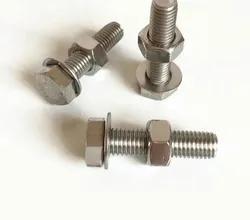
▲ Zinc plated (silver) vs stainless steel (matte silver) — zinc plating is the most common and cost-effective coating for indoor and general-purpose use
Hot-Dip Galvanizing (HDG)
What It Is
Hot-dip galvanizing (HDG) immerses the bolt in a bath of molten zinc at ~450°C. The zinc reacts with the steel surface to form a series of zinc-iron alloy layers, topped by a pure zinc outer layer. The result is a thick (45-85μm for fasteners), rough, matte gray finish that is metallurgically bonded to the steel — it won't peel or flake.
Where It Works
- Outdoor structural applications — buildings, bridges, towers, solar mounting, transmission poles, guardrails
- Long service life — 20-50 years in rural/atmospheric environments, 10-20 years in industrial/coastal (depending on coating thickness and environment)
- Heavy corrosion protection — 500-1000+ hours salt spray resistance; the thick zinc layer provides both barrier protection and sacrificial (cathodic) protection
- Grade 8.8 and below — HDG is safe for medium-strength bolts; grade 10.9 requires post-galvanizing baking at 200°C for 16+ hours
- Damaged coating self-heals — if scratched, the surrounding zinc corrodes preferentially, protecting the exposed steel (sacrificial protection). This is HDG's biggest advantage over zinc plating.
Where It Fails
- Thread fit issues — the thick coating (45-85μm) adds material to both bolt threads and nut threads. Standard nuts won't thread on. You MUST specify over-tapped nuts (ISO 4032 with 6H oversize, or ASTM A563 DH) for HDG bolts. This is the #1 HDG assembly mistake.
- High-strength bolts (10.9/12.9) — the acid pickling in HDG introduces hydrogen. Grade 10.9 requires mandatory post-bake. Grade 12.9 should generally avoid HDG (use zinc flake instead).
- Tight tolerances — the thick coating changes dimensions; HDG bolts don't fit in holes designed for zinc-plated bolts. Hole diameters must be increased by 1-2mm.
- Appearance — rough, spangled, matte gray finish. Not suitable for visible architectural applications where aesthetics matter.
- Cost — 2-4x the cost of zinc plating, typically $0.03-0.08 per bolt added cost (more for small bolts where the minimum bath charge applies).
HDG Coating Thickness Standards
| Standard | Min. Coating Thickness | Typical Application |
|---|---|---|
| ISO 10684 (fasteners) | 45μm (M6-M8), 50μm (M10-M14), 55μm (M16+) | General outdoor fasteners |
| ASTM A153 Class B | 44μm (avg), 37μm (local) | US standard fasteners |
| ASTM A153 Class C | 66μm (avg), 55μm (local) | Heavy-duty / coastal |
| GB/T 13912 (structural) | 65μm (t>6mm), 55μm (t<6mm) | Structural steelwork |
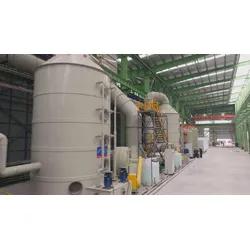
▲ HDG production line — bolts are immersed in molten zinc at 450°C, creating a thick metallurgically-bonded coating that lasts 20-50 years outdoors
Zinc Flake Coating (Dacromet / Geomet / Delta Tone)
What It Is
Zinc flake coating (often called by the brand names Dacromet, Geomet, Delta Tone, or Magni) is a water-based or solvent-based coating containing zinc flakes (and sometimes aluminum flakes) in an inorganic or organic binder. The bolt is dipped or sprayed, then cured at 200-300°C. The result is a thin (5-15μm), smooth, silver-gray or black finish with exceptional corrosion resistance.
Where It Works
- High-strength bolts (10.9/12.9) — NO hydrogen introduction (no acid pickling, no electroplating), making it the safest coating for high-strength steel. This is the #1 reason to choose zinc flake.
- High-corrosion environments — 500-1500+ hours salt spray resistance (with topcoat), comparable to or better than HDG in a fraction of the thickness
- Tight tolerances — thin coating (5-15μm) doesn't affect thread fit; standard nuts thread on without modification. No over-tapping needed.
- Automotive and OEM — the dominant coating in automotive (brake systems, chassis, suspension) due to consistent quality, controlled friction coefficient, and no hydrogen risk
- Aesthetic applications — smooth, uniform finish available in silver, black, or dark gray; suitable for visible components
- Complex geometries — excellent coverage on recesses, underhead radii, and thread roots (better than HDG which can have thin spots in recesses)
Where It Fails
- Cost — the most expensive common coating, 3-5x zinc plating and 1.5-2x HDG. Typically $0.05-0.15 per bolt added cost. Only justifiable for high-strength, high-corrosion, or OEM applications.
- Soft coating — the organic/inorganic binder is softer than metallic zinc; can be scratched or damaged during rough handling. Scratches don't self-heal (no sacrificial protection at the scratch site, though the zinc flakes provide some galvanic protection).
- Limited applicators — zinc flake coating requires specialized equipment and process control. Not every plater offers it, and quality varies significantly between applicators.
- Friction coefficient control — zinc flake coatings can have variable friction (torque-tension relationship) unless a specific topcoat/sealant is applied. For torque-critical applications, specify the friction coefficient range (e.g., 0.12-0.18 per VW 01131 or ISO 16047).
- Temperature limits — organic-binder zinc flake (Geomet 321, Delta Tone) degrades above 180-200°C. Inorganic-binder (Dacromet original) can handle higher temperatures but contains hexavalent chromium (restricted by RoHS/ELV in automotive).
Coating Comparison Summary
| Property | Zinc Plating | HDG | Zinc Flake |
|---|---|---|---|
| Coating thickness | 5-25μm | 45-85μm | 5-15μm |
| Salt spray (red rust) | 48-200h | 500-1000h+ | 500-1500h+ |
| Outdoor life (rural) | 1-5 years | 20-50 years | 10-30 years |
| Thread fit | Standard nut OK | Over-tapped nut required | Standard nut OK |
| HE risk (10.9/12.9) | High (needs bake) | Moderate (needs bake) | None |
| Scratch self-healing | Limited | Yes (sacrificial) | Limited |
| Relative cost | 1x (baseline) | 2-4x | 3-6x |
| Best for | Indoor, general, low cost | Outdoor structural, long life | High-strength, automotive, high corrosion |
Specialty Coatings
Mechanical Plating (Galvannealed / Peen Plating)
Mechanical plating deposits zinc (or zinc-aluminum) by cold-welding zinc powder onto the bolt surface using glass beads and a rotating barrel. No electricity, no acid pickling, no hydrogen. Thickness 5-25μm. Used for high-strength bolts where zinc plating's hydrogen risk is unacceptable but zinc flake is too expensive. Common in US market (ASTM B695).
Phosphate Coating (Manganese / Zinc Phosphate)
Phosphate coating is a thin (2-10μm) conversion coating that provides mild corrosion resistance and excellent paint adhesion. Almost always used as a base for oil, wax, or paint — not a final coating on its own. Common in automotive engine components (where oil retention is beneficial) and as a pre-paint treatment.
Cadmium Plating
Cadmium plating provides excellent corrosion resistance and natural lubricity, but cadmium is highly toxic and carcinogenic. Banned or restricted in most applications (RoHS, REACH, ELV). Only used in aerospace and military legacy applications where no approved alternative exists. Do NOT specify cadmium for new designs.
Nickel Plating / Chrome Plating
Decorative coatings for visible, low-load applications. Nickel provides a bright, corrosion-resistant finish; chrome adds hardness and scratch resistance. Both are expensive and provide poor galvanic protection (if scratched, the underlying steel corrodes rapidly due to the noble coating creating a galvanic cell). Only for aesthetics, not for structural fasteners.
PTFE / Xylan Coating
PTFE-based coatings (Xylan, Teflon coating) provide a low-friction surface for torque-critical applications and excellent chemical resistance. Often applied over zinc phosphate or zinc flake base. Used in valve assemblies, chemical processing, and high-temperature applications. Expensive but provides controlled friction (0.08-0.12) and chemical resistance.
For more on coating durability in specific applications, see our salt spray testing guide, solar coating guide, and hydrogen embrittlement prevention guide.
How to Specify Coating on Your RFQ
Don't just say "zinc plated" or "HDG." Be specific:
Good specification:
"M16 x 80mm DIN 931 bolt, grade 8.8, hot-dip galvanized per ISO 10684, min. 55μm coating thickness, with over-tapped ISO 4032 nut (6H oversize) and HDG flat washer. Salt spray test report required (min. 500h to red rust)."
Poor specification:
"M16 bolts, galvanized" — doesn't specify standard, thickness, nut type, or test requirements.
Key elements to include:
- Coating type (zinc plating / HDG / zinc flake / etc.)
- Applicable standard (ISO 10684, ASTM A153, ASTM F1941, etc.)
- Minimum coating thickness (in μm or mils)
- Passivation/topcoat type (for zinc plating: blue/clear, yellow, black; for zinc flake: brand and grade)
- Thread allowance (for HDG: over-tapped nut specified)
- Post-treatment (for 10.9/12.9: baking temperature and duration)
- Test requirements (salt spray hours, coating thickness measurement method, friction coefficient if applicable)
We supply DIN 931 bolts and DIN 933 bolts with zinc plating, HDG, and zinc flake coatings, plus grade 10.9 structural bolt sets with HDG and mandatory post-bake. All coatings come with thickness test reports and salt spray certificates on request.
Coating Comparison at a Glance
| Coating | Salt Spray (h) | Thickness (μm) | Relative Cost | Best For | HE Risk |
|---|---|---|---|---|---|
| Zinc Plating | 48-200 | 5-12 | Low (1x) | Indoor, dry environments | High (grade 10.9+) |
| HDG (Hot-Dip Galvanized) | 500-1000+ | 45-85 | Medium (2-3x) | Outdoor structural, solar, marine | Medium (thick coating) |
| Zinc Flake (Dacromet/Geomet) | 500-1500 | 8-15 | High (3-6x) | Automotive, high-strength, EV | None (no acid process) |
| Black Oxide | 12-48 | 1-3 | Low (1x) | Indoor machinery, appearance | None |
| PTFE / Xylan Coated | 1000+ | 15-25 | Very High (8-12x) | Chemical, offshore, controlled friction | None |
Salt spray hours per ASTM B117. Actual service life varies by environment — coastal exposure is 5-10x more aggressive than rural. HE = Hydrogen Embrittlement risk for grade 10.9+ bolts.
FAQ
Q: Can I paint over zinc-plated or HDG bolts?
A: Yes, but you need the right primer. Zinc surfaces are non-porous and don't accept paint directly — the paint will peel. Use a zinc-compatible primer (etch primer, zinc-rich primer, or two-part epoxy primer) specifically formulated for galvanized steel. For HDG, the surface should be lightly abraded or treated with a "t-wash" (mordant solution) to create a profile before priming. For zinc plating, a light scuff and etch primer is usually sufficient. Never apply paint directly to bright zinc plating without primer — it will fail within months.
Q: What's the difference between HDG and galvannealed?
A: HDG (hot-dip galvanized) is dipped in molten zinc and cooled quickly, leaving a pure zinc outer layer with a spangled, matte gray appearance. Galvannealed is HDG that is immediately heated after dipping (annealed), causing the pure zinc layer to fully alloy with the steel into zinc-iron layers. Galvannealed has a dull gray, non-spangled finish, is harder and more scratch-resistant, and takes paint better — but has slightly lower corrosion resistance (the pure zinc outer layer is gone). Galvannealed is common in automotive sheet steel but rare for fasteners. For fasteners, standard HDG is the norm.
Q: How do I check coating thickness on received bolts?
A: Use a magnetic coating thickness gauge (e.g., Elcometer 456, Fischer MP0R) — non-destructive, takes 2 seconds per reading. Take at least 5 readings per bolt (head, shank, thread, underhead, tip) and average. For HDG, verify against the standard minimum (45-65μm depending on size and standard). For zinc plating, verify 5-15μm typical. For zinc flake, verify 5-15μm. If you don't have a gauge, request the supplier's coating thickness test report (ISO 2178 / ASTM E376 method) with each shipment. For critical applications, do a cross-section micrograph (destructive) to verify layer structure.
Q: Can I mix coating types in the same project?
A: Generally yes — different components can have different coatings based on their exposure and load. For example, structural bolts might be HDG while interior equipment bolts are zinc plated. But here's the catch: avoid mixing coatings on bolts that are electrically connected in a corrosive environment — dissimilar metals (zinc + stainless steel, for example) can create galvanic corrosion cells. If you must mix, use an insulating washer or separator. Also, ensure that the coating choice is documented per component so maintenance teams know what they're dealing with during inspection and replacement.
Q: What coating should I use for a coastal project (within 1km of ocean)?
A: For coastal applications (salt spray, high humidity), the best choices are: (1) HDG with 65μm+ coating (ASTM A153 Class C or equivalent) for grade 8.8 structural bolts — expect 10-20 years service life. (2) Zinc flake with topcoat (Geomet 500B or Delta Protekt KL120) for grade 10.9 bolts — 1000+ hours salt spray, no hydrogen risk. (3) 316/A4 stainless steel for the highest corrosion requirement — no coating needed, but 3-5x the cost of HDG. Zinc plating is NOT recommended for coastal use — red rust will appear in 6-18 months. If budget is tight, HDG is the best value; if high-strength bolts are needed, zinc flake is the safe choice.
Coating selection is one of those decisions that seems simple but has outsized consequences. Choose right, and your bolts will outlast the equipment they hold together. Choose wrong, and you'll be replacing bolts — and dealing with the consequences of corrosion — years before you should. Define your environment, match the coating to the strength grade, account for thread tolerance, and think in total cost of ownership rather than per-unit price. That's how you get 20+ years of trouble-free service from a five-cent bolt.
Need a Quote? Talk to Our Fastener Engineers
Email: [email protected]
WhatsApp / Phone: +86 185 3100 9807
Factory: No. 668 Longyuan Street, Yongnian District, Handan City, Hebei Province, China
✅ 180-day free warehouse storage | ✅ 96-hour stock delivery | ✅ Mixed container small orders | ✅ ISO 9001 / 14001 / 45001 certified