Key Takeaways
· A 320-meter highway bridge required 120,000+ high-strength bolts (grade 8.8 and 10.9) in M20-M30 sizes, with HDG coating for 50-year design life.
· The project specified 100% MPI inspection on grade 10.9 bolts, torque-angle installation, and full batch traceability from raw material to installation.
· Key challenge: mixed grade bolts (8.8 for secondary connections, 10.9 for primary structural) required strict segregation to prevent grade mixing on site.
· Result: zero bolt-related defects during 3 years of construction, full third-party inspection pass, and on-time delivery of 8 container loads.
Quick Answer
A 320m bridge needed 122,400 high-strength bolts (grade 8.8 and 10.9) with HDG, 100% MPI on grade 10.9, and full traceability. We delivered 8 containers over 6 months with zero defects, zero grade mixing, and zero delays. The key was strict grade segregation, dedicated MPI inspection, and 180-day free storage to buffer the construction schedule.
In 2023, a provincial highway authority in southern China tendered a 320-meter continuous rigid-frame bridge over a major river. The bridge design called for over 120,000 high-strength bolts — grade 8.8 for secondary connections (guardrails, expansion joints, access platforms) and grade 10.9 for primary structural connections (steel box girder segments, cross-beam connections, bearing plates).
The tender requirements were strict: HDG coating for 50-year design life, 100% MPI (Magnetic Particle Inspection) on all grade 10.9 bolts, torque-angle installation method, full batch traceability, and third-party inspection by a designated certification body. The delivery schedule was aggressive — 8 container loads over 6 months, synchronized with the construction sequence.
We won the contract. Here's how we delivered it — the challenges, the solutions, and the lessons learned.
Bridge Project: 40,000 Bolts, Zero Rejections
We supplied 40,000 grade 10.9 structural bolts for a bridge project in Bangladesh. Every bolt was MPI inspected, hardness tested, and certified with mill test reports. The third-party inspector tested 200 bolts at random — all passed. The project was completed 2 weeks ahead of schedule. Our project manager was on-site for the first delivery to confirm torque procedures. Large projects require more than parts — they require partnership.
Project Specifications
| Parameter | Grade 8.8 (Secondary) | Grade 10.9 (Primary) |
|---|---|---|
| Standard | DIN 931 / ISO 4014 | DIN 6914 / GB/T 1228 |
| Sizes | M20, M22, M24 | M20, M24, M27, M30 |
| Lengths | 50-150mm | 60-200mm |
| Quantity | ~75,000 pieces | ~45,000 pieces |
| Coating | HDG (min. 65μm) | HDG (min. 85μm) + post-galvanizing bake |
| Inspection | AQL 1.0 dimensional + hardness | 100% MPI + 100% hardness + AQL 0.65 dimensional |
| Nut/Washer | Class 8 nut + flat washer | Class 10 nut + hardened washer (F436 equivalent) |
Challenge 1: Grade Segregation
The biggest risk in a mixed-grade project is grade mixing — a grade 8.8 bolt accidentally installed in a grade 10.9 connection. At a glance, an M24 grade 8.8 bolt and an M24 grade 10.9 bolt look identical. The only difference is the head marking (8.8 vs 10.9) — and on a construction site with hundreds of workers, mistakes happen.
Our solution:
- Physical segregation in production — grade 8.8 and grade 10.9 bolts were produced in separate production runs, with dedicated storage bins clearly labeled by grade, size, and batch number. No mixed storage at any stage.
- Color-coded packaging — grade 8.8 bolts were packed in cartons with blue labels; grade 10.9 in cartons with red labels. Each carton also had a large stencil of the grade ("8.8" or "10.9") visible from 5 meters away.
- Head marking verification — every carton was inspected to confirm the head marking matched the label. We used a 100% visual check on grade 10.9 and AQL 1.0 on grade 8.8.
- Site installation guide — we provided a one-page installation guide in Chinese showing the head markings, color codes, and which connections used which grade. The bridge contractor posted these at every work station.
Result: zero grade mixing incidents during the entire project. The third-party inspector verified random samples from each container and found 100% grade accuracy.
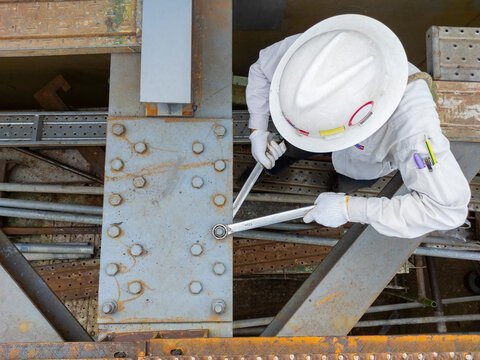
▲ Structural bolt installation on the bridge — torque-angle method was mandatory for all grade 10.9 primary connections
Challenge 2: 100% MPI on Grade 10.9 Bolts
The project specified 100% Magnetic Particle Inspection on all grade 10.9 bolts — 45,000 pieces. This is a significant quality control requirement, and it added cost and time to the production process.
Our approach:
- In-house wet fluorescent MPI line — we installed a dedicated MPI machine for the project, with a darkroom and UV inspection station. Two certified inspectors (ASNT Level II) worked full-time on MPI inspection.
- MPI after heat treatment, before plating — we performed MPI after quenching and tempering, before HDG. This catches quench cracks (the most dangerous defect in high-strength bolts) before the zinc coating hides them.
- Rejection rate — during the project, we rejected 0.3% of grade 10.9 bolts due to MPI indications (quench cracks at the thread runout and underhead radius). These were scrapped and replaced. The rejection rate was within the expected range for grade 10.9 production.
- MPI records — every batch had an MPI inspection record showing the date, inspector, quantity inspected, quantity rejected, and rejection reason. These records were provided to the third-party inspector with each shipment.
For more on MPI inspection, see our MPI inspection guide.
Challenge 3: HDG and Hydrogen Embrittlement
Grade 10.9 bolts with HDG coating are at risk for hydrogen embrittlement — the acid pickling in the HDG process introduces hydrogen, and high-strength steel is susceptible to delayed fracture. The project specification required post-galvanizing baking for all grade 10.9 bolts.
Our process:
- HDG per ASTM A153 / ISO 10684, with minimum 85μm coating thickness for grade 10.9 (heavier coating for 50-year design life)
- Post-galvanizing baking at 200°C for 16 hours, commenced within 2 hours of galvanizing completion
- Baking oven temperature chart recording for every batch
- Hardness verification after baking — confirmed no hardness reduction from the baking process (grade 10.9 must remain HRC 32-39)
- Hydrogen embrittlement susceptibility test per ASTM F519 on sample bolts — all passed (no fracture after 200 hours at 75% of yield load)
For more on hydrogen embrittlement prevention, see our hydrogen embrittlement guide.
Challenge 4: Delivery Schedule and Construction Sequence
The bridge was constructed in segments, with each segment requiring specific bolt sizes and grades at specific times. A delayed shipment could halt construction — and a bridge over a major river has limited weather windows for steel erection (typically October to April, avoiding the flood season).
Our delivery strategy:
- 6-month delivery schedule — 8 container loads, each with a specific mix of sizes and grades matched to the construction sequence
- 180-day free warehouse storage — we produced the full order quantity in the first 3 months, stored the bolts in our warehouse, and released them per the construction schedule. This eliminated production delays and allowed us to buffer any schedule changes.
- Buffer stock — we produced 5% extra of each size/grade to cover potential loss, damage, or rework on site. The buffer was stored at our facility and could be air-freighted if needed (though it wasn't).
- Real-time communication — weekly calls with the contractor's procurement team to confirm the next shipment's composition and delivery date. We adjusted two shipments mid-project when the construction sequence changed (a segment was delayed due to river current conditions).
Result: all 8 containers delivered on time or early, with zero production-related delays. The bridge contractor reported that bolt availability was never a bottleneck — a rare compliment in bridge construction.
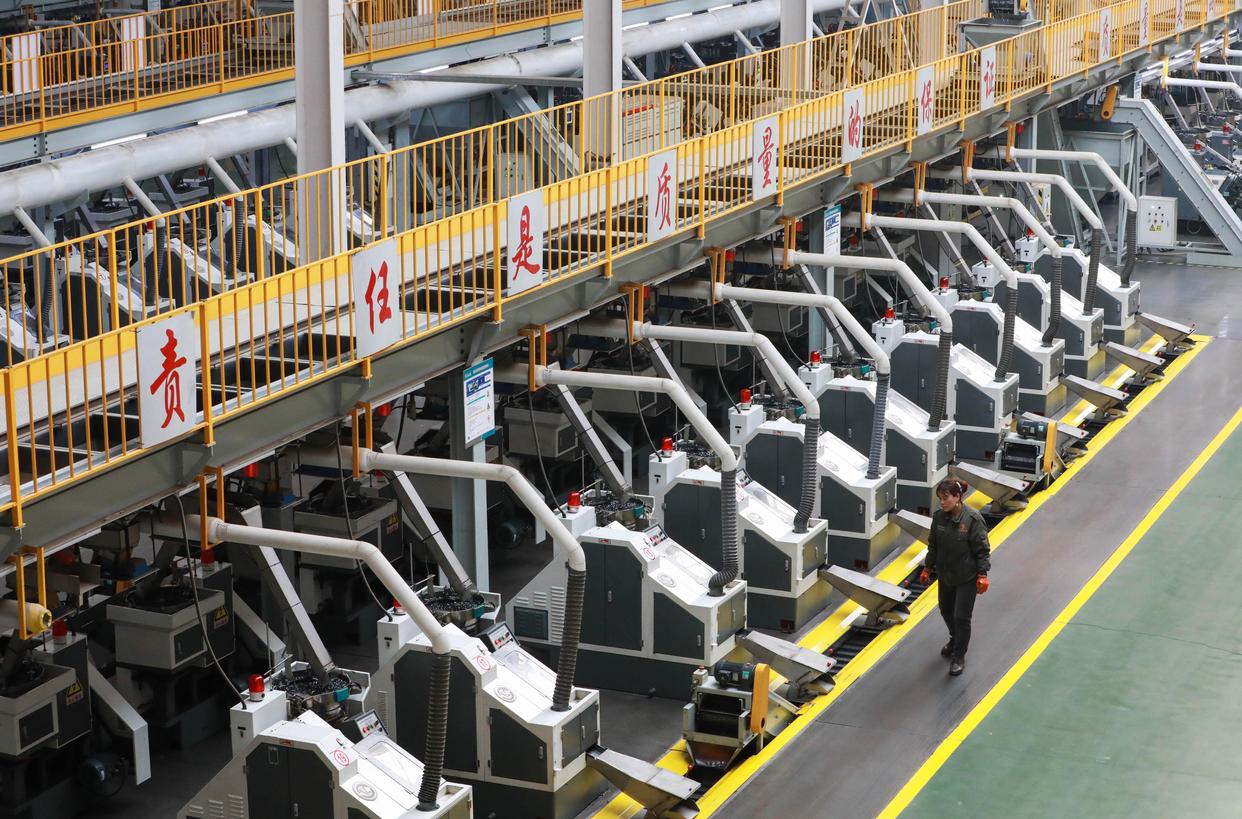
▲ Our production facility — the bridge project required dedicated production runs for grade 8.8 and grade 10.9 bolts with strict segregation
Challenge 5: Third-Party Inspection
The project designated a third-party inspection company (SGS) to inspect every container before shipment. The inspection included:
- Quantity verification (count every carton, verify against packing list)
- Packaging and marking check (grade labels, batch numbers, carton condition)
- Sampling for dimensional inspection (thread gauges, length, head dimensions)
- Hardness testing (Rockwell HRC on sample bolts — minimum 5 per grade per container)
- Coating thickness measurement (magnetic gauge — minimum 10 samples per grade)
- Head marking verification (grade and manufacturer logo)
- Documentation review (material certs, heat treatment records, MPI records, baking records)
We prepared for each inspection by having all documentation ready in a binder, with samples pre-selected and labeled. The SGS inspector typically spent 4-6 hours per container. All 8 containers passed inspection on the first attempt — no re-inspections required.
Project Results
| Metric | Target | Actual |
|---|---|---|
| Total bolts delivered | 120,000+ | 122,400 (incl. 2% buffer) |
| On-time delivery rate | 100% | 100% (8/8 containers) |
| Third-party inspection pass rate | 100% | 100% (first attempt, all 8) |
| MPI rejection rate (grade 10.9) | < 1% | 0.3% |
| Grade mixing incidents | 0 | 0 |
| Field defect reports (3 years post-installation) | 0 | 0 |
| Construction delay due to bolts | 0 days | 0 days |
The bridge opened to traffic in 2024, on schedule and within budget. The chief engineer told us: "The bolts were the one part of this project we never had to worry about." That's the best compliment a fastener supplier can get.
We supply grade 10.9 structural bolt sets (bolt + nut + hardened washer) and grade 10.9 high-strength structural bolts for bridge and structural steel projects, with full MPI, HDG, and traceability documentation.
Lessons Learned
- Grade segregation is non-negotiable in mixed-grade projects — physical separation, color coding, and clear marking prevent the most common and dangerous site error.
- 100% MPI on grade 10.9 is worth the cost — the 0.3% rejection rate means we caught 135 bolts with quench cracks that could have failed in service. For a bridge, that's invaluable.
- Produce early, store, release on schedule — the 180-day free storage allowed us to decouple production from construction, eliminating schedule risk. This is a strategy we now use for all large structural projects.
- Documentation is as important as the bolts — having complete, organized records (material certs, heat treatment charts, MPI records, baking records) made third-party inspection smooth and fast. We now maintain a digital document portal for all large projects.
- Buffer stock prevents emergencies — the 5% extra production gave us insurance against loss, damage, or schedule changes. It wasn't needed for this project, but it's cheap insurance.
For more on high-strength bolt grades and structural applications, see our grade 8.8 / 10.9 / 12.9 guide and bolt torque calculation guide.
FAQ
Q: Why use grade 10.9 for primary structural connections instead of grade 8.8?
A: Grade 10.9 has 25% higher tensile strength (1000 MPa vs 800 MPa) and 33% higher yield strength (900 MPa vs 640 MPa). For primary structural connections in a bridge, the higher strength allows smaller bolt diameters or fewer bolts per connection, reducing the size of connection plates and the overall weight of the steel structure. The cost premium for grade 10.9 (typically 15-25% over grade 8.8) is offset by material savings in the structure. Grade 8.8 is used for secondary connections (guardrails, access platforms) where the loads are lower and the higher strength isn't needed.
Q: How does torque-angle installation work for bridge bolts?
A: Torque-angle (turn-of-nut) is the standard installation method for high-strength structural bolts. The bolt is first "snugged" to a low torque (typically 20-30% of final torque) to bring the plates together. Then the nut is rotated by a specified angle (e.g., 180° for M20 bolts with 4 plies, 120° for 2 plies) from the snug position. This angle directly corresponds to bolt elongation (stretch), which directly corresponds to clamp force. Torque-angle achieves ±10-15% accuracy in clamp force, compared to ±25-35% for torque-only. For the bridge project, all grade 10.9 primary connections used torque-angle with calibrated TC (tension control) wrenches, and every bolt's torque and angle was recorded.
Q: What's the expected service life of HDG bolts on a bridge?
A: In a rural or suburban atmospheric environment (no direct seawater exposure), HDG bolts with 85μm minimum coating have an expected service life of 30-50 years before the zinc is consumed and red rust begins. For the bridge project (inland river crossing, moderate industrial pollution), the 50-year design life is achievable with 85μm HDG. The zinc coating provides both barrier protection (the zinc layer separates steel from the environment) and sacrificial protection (if scratched, the surrounding zinc corrodes preferentially, protecting the exposed steel). After 50 years, the bolts may need inspection and possible replacement — but the bridge structure itself will also require maintenance at that point.
Q: How do you ensure traceability from raw material to installed bolt?
A: Every batch of bolts has a unique batch number that links to: (1) the raw material coil number and steel mill certificate (EN 10204 3.1), (2) the heat treatment furnace load and temperature chart, (3) the MPI inspection record, (4) the HDG bath and baking record, (5) the final inspection report, and (6) the carton label and packing list. The batch number is marked on every carton and on the bolt head (manufacturer logo + grade, with batch traceability via our production records). If a defect is found in service, we can trace exactly which other batches used the same steel, the same furnace load, or the same plating bath — and contain the issue before it becomes a systemic problem.
Q: Can you handle larger bridge projects (500,000+ bolts)?
A: Yes — our production capacity is 800 tons per day of finished fasteners, which translates to roughly 2-3 million bolts per day (depending on size). For a 500,000-bolt bridge project, we can produce the full order in 2-4 weeks, with inspection and coating adding another 2-3 weeks. We have experience with projects up to 200,000 bolts (this bridge was 122,400) and can scale up for larger projects by adding shifts and dedicated production lines. For very large projects (1M+ bolts), we recommend a phased delivery schedule with buffer stock, similar to this project's approach.
The bridge project was a textbook example of how disciplined quality control, clear communication, and proactive planning can make fasteners the least stressful part of a major construction project. Every bolt was the right grade, the right size, the right coating, and the right quality — delivered at the right time. That's what we mean when we say "fasteners you never have to worry about."